Quotessence
Home / Quotes / Quote by Virginia Woolf

Quote by Virginia Woolf

Work

A moment's liberty: the shorter diary

This book is a collection of diary entries that delve into the author's personal experiences and reflections on moments of freedom. The entries offer a glimpse into the author's life, capturing the essence of these brief, yet significant, instances of liberation. more

Author
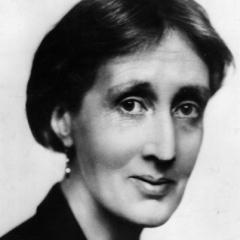
Virginia Woolf
Virginia Woolf

British modernist writer, known for her unique narrative techniques and profound portrayal of female experience. Her works include 'To the Lighthouse' and 'Mrs. Dalloway'. more

You May Also Like

“A dead language is not only one no longer spoken or written, it is unyielding language content to admire its own paralysis. Like statist language, censored and censoring. Ruthless in its policing duties, it has no desire or purpose other than maintaining the free range of its own narcotic narcissism, its own exclusivity and dominance. However moribund, it is not without effect for it actively thwarts the intellect, stalls conscience, suppresses human potential. Unreceptive to interrogation, it cannot form or tolerate new ideas, shape other thoughts, tell another story, fill baffling silences.”

“Do they still call it infatuation? That magic ax that chops away the world in one blow, leaving only the couple standing there trembling? Whatever they call it, it leaps over anything, takes the biggest chair, the largest slice, rules the ground wherever it walks, from a mansion to a swamp, and its selfishness is its beauty.... People with no imagination feed it with sex -- the clown of love. They don't know the real kinds, the better kinds, where losses are cut and everybody benefits. It takes a certain intelligence to love like that -- softly, without props.”

“In order to be as free as I possibly can, in my own imagination, I can't take positions that are closed. Everything I've ever done, in the writing world, has been to expand articulation, rather than to close it, to open doors, sometimes, not even closing the book -- leaving the endings open for reinterpretation, revisitation, a little ambiguity.”

“The idea of a wanton woman is something I have inserted into almost all of my books. An outlaw figure who is disallowed in the community because of her imagination or activity or status - that kind of anarchic figure has always fascinated me. And the benefits they bring with them, in spite of the fact that they are either dismissed or upbraided - something about their presence is constructive in the long run.”

“When my husband had an affair with someone else I watched his eyes glaze over when we ate dinner together and I heard him singing to himself without me, and when he tended the garden it was not for me. He was courteous and polite; he enjoyed being at home, but in the fantasy of his home I was not the one who sat opposite him and laughed at his jokes. He didn't want to change anything; he liked his life. The only thing he wanted to change was me.”

“It was actually books that started to make those pockets of freedom, which I hadn't otherwise experienced. I do see them as talismans, as sacred objects. I see them as something that will protect me, I suppose, that will save me from things that I feel are threatening. I still think that; it doesn't change. It doesn't change, having money, being successful. So from the very first, if I was hurt in some way, then I would take a book -- which was very difficult for me to buy when I was little -- and I would go up into the hills, and that is how I would assuage my hurt.”