“If Men are so wicked as we now see them with Religion what would they be if without it?”
Quote by Benjamin Franklin
Work
The Political Thought of Benjamin Franklin
The Political Thought of Benjamin Franklin delves into the intellectual contributions of Franklin, examining his views on democracy, governance, and the role of the individual in society. The book provides an in-depth analysis of Franklin's political theories, drawn from his writings, speeches, and correspondence. more
Author
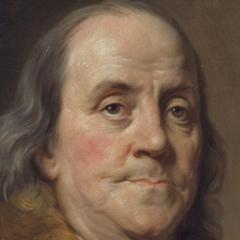
Benjamin Franklin
Benjamin Franklin was a prominent figure in American history, serving as one of the Founding Fathers of the United States. He was a statesman, scientist, inventor, and writer, born on January 17, 1706, and died on April 17, 1790. Franklin is renowned for his contributions to electricity, his support for the American colonial independence movement, and his successful diplomatic efforts in France. more
You May Also Like
“But the mere circumstance of complexion cannot deprive them of the character of men.”
Source: Selected Writings of James Madison
Source: The Federalist Papers: The Making of the US Constitution
Source: Washington's Farewell Address to the People of the United States of America
Source: The Federalist: With Letters of Brutus
Source: The Federalist Papers: A Collection of Essays Written in Favour of the New Constitution
Source: The Essential Federalist: A New Reading of the Federalist Papers
Source: The Federalist on the New Constitution
Source: The Federalist, on the New Constitution, Written in the Year 1788