Quotessence
Home / Quotes / Quote by Raymond Chandler

Quote by Raymond Chandler

“Down these mean streets a man must go who is not himself mean, who is neither tarnished nor afraid...He is the hero, he is everything. He must be a complete man and a common man and yet an unusual man. He must be, to use a rather weathered phrase, a man of honor, by instinct, by inevitability, without thought of it, and certainly without saying it. He must be the best man in his world and a good enough man for any world”

Quote by Raymond Chandler

Work

The World of Raymond Chandler: In His Own Words

The book includes letters, essays, and interviews, offering a comprehensive view of Chandler's thoughts on his work, the genre, and the era in which he wrote. more

Author
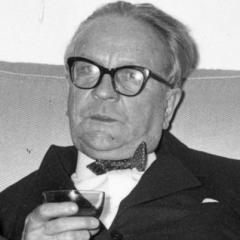
Raymond Chandler
Raymond Chandler

Raymond Chandler was an American novelist renowned for his hard-boiled detective novels. His works are celebrated for their unique narrative style and profound insights into the criminal world. Chandler's most famous works include 'The Big Sleep' and 'Farewell, My Lovely'. more

You May Also Like

“Listen, my friend, there are two races of beings. The masses teeming and happy - common clay, if you like - eating, breeding, working, counting their pennies; people who just live; ordinary people; people you can't imagine dead. And then there are the others - the noble ones, the heroes. The ones you can quite well imagine lying shot, pale and tragic; one minute triumphant with a guard of honor, and the next being marched away between two gendarmes”

“If mankind is to profit freely from the small and sporadic crop of the heroically gifted it produces, it will have to cultivate the delicate art of handling ideas. Psychology is now able to tell us with reasonable assurance that the most influential obstacle to freedom of thought and to new ideas is fear; and fear which can with inimitable art disguise itself as caution, or sanity, or reasoned skepticism, or on occasion even as courage.”

“Walking the streets of Tokyo with Hawking in his wheelchair ... I felt as if I were taking a walk through Galilee with Jesus Christ [as] crowds of Japanese silently streamed after us, stretching out their hands to touch Hawking's wheelchair. ... The crowds had streamed after Einstein [on Einstein's visit to Japan in 1922] as they streamed after Hawking seventy years later. ... They showed exquisite choice in their heroes. ... Somehow they understood that Einstein and Hawking were not just great scientists, but great human beings.”

“Saint George killed the last dragon, and he was called a hero for it. I've never seen a dragon, and I wish he would have left at least one. Saint Patrick made a name for himself by running the snakes out of Ireland, leaving the place vulnerable to rodent infestation. This business of making saints out of men who exterminate their fellow creatures has got to stop. All I'm saying is, it's starting to get a little lonely up here at the top of the food chain.”

“The character truest to itself becomes eccentric rather than immovably centered, as Emerson defined the noble character of the hero. At the edge, the certainty of borders gives way. We are more subject to invasions, less able to mobilize defenses, less sure of who we really are, even as we may be perceived by others as a person of character. The dislocation of self from center to indefinite edge merges us more with the world, so that we can feel blest by everything.”