Quotessence
Home / Quotes / Quote by Michel Foucault

Quote by Michel Foucault

Work

The Order of Things

This book delves into the ways in which human societies have structured and classified information, examining the evolution of these systems across different epochs and cultures. more
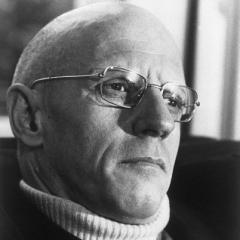
Author

Michel Foucault
Michel Foucault

Michel Foucault was a French philosopher known for his critical analysis of knowledge, power, and discourse. His work covered a wide range of topics, including madness, prisons, sexuality, archaeology of knowledge, and biopolitics. Foucault's ideas have had a profound impact on postmodernism, critical theory, and cultural studies. more

You May Also Like

“Sexuality is a part of our behavior. It's part of our world freedom. Sexuality is something that we ourselves create. It is our own creation, and much more than the discovery of a secret side of our desire. We have to understand that with our desires go new forms of relationships, new forms of love, new forms of creation. Sex is not a fatality; it's a possibility for creative life. It's not enough to affirm that we are gay but we must also create a gay life.”

“During the years 1945-1965 (I am referring to Europe), there was a certain way of thinking correctly, a certain style of politicaldiscourse, a certain ethics of the intellectual. One had to be on familiar terms with Marx, not let one's dreams stray too far from Freud.... These were therequirements that made the strange occupation of writing and speaking a measure of truth about oneself and one's time acceptable.”

“Philip Galanes has fashioned a novel both bleak and funny about a young man's struggle to sort out his troubled love: the too-strong love for his mother, the too-weak love for his suicidal father, and the all-consuming love of anonymous sexual encounters. Pointed and acute, this story tells of the narrator's many betrayals of others and their many betrayals of him. It exists in an uncomfortable moral space where the humor of terrible things sometimes outweighs, but never obscures, their poignancy.”