Quotessence
Home / Quotes / Quote by Richard M. Nixon

Quote by Richard M. Nixon

“We are committed to cleaning up the air and cleaning up the water. But we also are committed to a strong economy, and we are not going to allow the environmental issue to be used sometimes falsely and sometimes in a demagogic way basically to destroy the system-the industrial system that made this the great country it is.”

Quote by Richard M. Nixon

Author
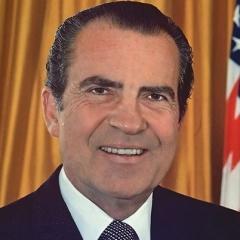
Richard M. Nixon
Richard M. Nixon

Richard Milhous Nixon (January 9, 1913 – April 22, 1994) was the 37th president of the United States, serving from 1969 to 1974. A Republican, he previously served as a U.S. representative and senator from California and as the 36th vice president under Dwight D. Eisenhower. Nixon is best known for his Cold War foreign policy, including the historic 1972 visit to China, détente with the Soviet Union, and the gradual withdrawal of U.S. troops from Vietnam. However, his presidency was overshadowed by the Watergate scandal, leading to his resignation—the only such case in U.S. history. His legacy remains complex, marked by significant diplomatic achievements and profound ethical failures. more

You May Also Like

“We can break the mountains apart; we can drain the rivers and flood the valleys. We can turn the most luxuriant forests into throw-away paper products. We can tear apart the great grass cover of the western plains and pour toxic chemicals into the soil and pesticides onto the fields until the soil is dead and blows away in the wind. We can pollute the air with acids, the rivers with sewage, the seas with oil - all this in a kind of intoxication with our power for devastation at an order of magnitude beyond all reckoning.”

“We can decide that the presence of cancer-causing substances in our air, water, and food is too expensive. A 2009 study, for example, has found that coal miners in Appalachia costs the region five times more in premature deaths, including from cancer, than it provides to the region in jobs, taxes, and economic benefits. In California, the production and use of hazardous chemicals cost the state $2.6 billion in 2004 alone in lost wages and health-care expenses to treat workers and children with pollution-linked diseases.”

“We must recognize that the goal of a cleaner environment will not be achieved by rhetoric or moral dedication alone. It will not be cheap or easy and the costs will have to be borne by each citizen, consumer and taxpayer. How clean is clean enough can only be answered in terms of how much we are willing to pay and how soon we seek success... It is simplistic to seek ecological perfection at the cost of bankrupting the very tax-paying enterprises which must pay for the social advances we seek.”

“What can be done? Well, the governments of the world can undertake what amounts to a vast clean-up campaign and a vast campaign of organic renewal. The problem is the cost of an effective operation, which is enormous, and thus must be paid by someone via some form of taxes.”

“What, then, is the effect of pesticides? Pesticides have created a legacy of pain, and misery, and death for farm workers and consumers alike. The crop which poses the greatest danger, and the focus of our struggle, is the table grape crop. These pesticides soak the fields. Drift with the wind, pollute the water, and are eaten by unwitting consumers. These poisons are designed to kill, and pose a very real threat to consumers and farm workers alike.”

“When it comes to acid rain or oil spills or depleted fisheries or tainted groundwater or fluorocarbon propellants or radiation leaks or sexually transmitted diseases, national frontiers are simple irrelevant. Toxins don't stop for customs inspections and microbes don't carry passports. North America became a water and free-trade zone long before NAFTA loosened up the market in goods.”

“While the rich reap most of the benefits of technological development, the poor bear an unequal burden of dealing with the consequences of the resulting increased pollution. The poor continue to live in greatest proximity to the sources of pollution, the infrastructure and machinery of industry. They work in the most polluted and physically dangerous workplaces. And these same individuals, living and working closest to the sources of environmental catastrophe, are also the ones most lacking decent health care.”

“You know that the air and water are being polluted, as is everything we touch and live with, and we go on corrupting the nature that we need. We don't realize we have a commitment to God to take care of nature. To cut down a tree, to waste water when there is so much lack of it, to let buses poison our atmosphere with those noxious fumes from their exhausts, to burn rubbish haphazardly-all that concerns our alliance with God.”