Quotessence
Home / Quotes / Quote by Cesar Chavez

Quote by Cesar Chavez

“What, then, is the effect of pesticides? Pesticides have created a legacy of pain, and misery, and death for farm workers and consumers alike. The crop which poses the greatest danger, and the focus of our struggle, is the table grape crop. These pesticides soak the fields. Drift with the wind, pollute the water, and are eaten by unwitting consumers. These poisons are designed to kill, and pose a very real threat to consumers and farm workers alike.”

Quote by Cesar Chavez

Work

An Organizer's Tale: Speeches

This book compiles a series of speeches delivered by an organizer, addressing various aspects of leadership and social activism. The speeches likely delve into the challenges and triumphs of organizing movements, offering insights into the strategies and motivations behind effective leadership in the context of social change. more

Author
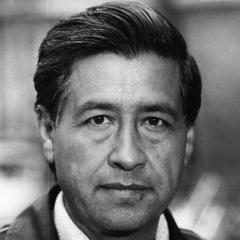
Cesar Chavez
Cesar Chavez

Cesar Chavez was a prominent civil rights activist who dedicated his life to advocating for the rights of farm workers in the United States. Born on March 31, 1927, in Yuma, Arizona, Chavez grew up in a migrant farmworker family and experienced firsthand the hardships faced by agricultural laborers. He co-founded the National Farm Workers Association (NFWA) in 1962, which later became the United Farm Workers (UFW). Through nonviolent protest, boycotts, and strikes, Chavez fought for fair wages, better working conditions, and improved living standards for farm workers. His efforts led to significant changes in the agricultural industry and inspired countless others to join the fight for social justice. more

You May Also Like

“When it comes to acid rain or oil spills or depleted fisheries or tainted groundwater or fluorocarbon propellants or radiation leaks or sexually transmitted diseases, national frontiers are simple irrelevant. Toxins don't stop for customs inspections and microbes don't carry passports. North America became a water and free-trade zone long before NAFTA loosened up the market in goods.”

“While the rich reap most of the benefits of technological development, the poor bear an unequal burden of dealing with the consequences of the resulting increased pollution. The poor continue to live in greatest proximity to the sources of pollution, the infrastructure and machinery of industry. They work in the most polluted and physically dangerous workplaces. And these same individuals, living and working closest to the sources of environmental catastrophe, are also the ones most lacking decent health care.”

“You know that the air and water are being polluted, as is everything we touch and live with, and we go on corrupting the nature that we need. We don't realize we have a commitment to God to take care of nature. To cut down a tree, to waste water when there is so much lack of it, to let buses poison our atmosphere with those noxious fumes from their exhausts, to burn rubbish haphazardly-all that concerns our alliance with God.”

“... we find ourselves facing a rising tide of biologically active, synthetic organic chemicals. Some tinker with our hormones. Some attach themselves to our chromosomes and trigger mutations. Some cripple the immune system. Some light up our genes and so enhance the production of certain enzymes. If we could metabolize these chemicals into completely benign breakdown products and excrete them, they would pose less of a hazard. Instead, a good many of them accumulate.”

“Before Alar, there was EDB, a potent human carcinogen allowed in the grain supply and other food for more than a decade after it was known to be dangerous. There was heptachlor, linked to leukemia, and aldicarb, which poisoned thousands of California watermelons, yet is still allowed in potatoes and bananas at levels exposing up to 80,000 children a day to what EPA itself says are unacceptable high risks. Trust the government? Why should we?”

“Children whose developing lungs are particularly vulnerable suffer the most from air pollution. For children, breathing the air in cities with the worst pollution, such as Beijing, Calcutta, Mexico City, Shanghai, and Tehran, is equivalent to smoking two packs of cigarettes a day.”

“Draconian limits on economic growth and on the use of the automobile should not be necessary in order to give Americans clean air at levels they are willing to pay for, but it will require significant Federal, State, and local leadership and innovative approaches from government and industry.”