Quotessence
Home / Quotes / Quote by Kenneth E. Boulding

Quote by Kenneth E. Boulding

“Economic problems have no sharp edges. They shade off imperceptibly into politics, sociology, and ethics. Indeed, it is hardly an exaggeration to say that the ultimate answer to every economic problem lies in some other field.”

Quote by Kenneth E. Boulding

Author
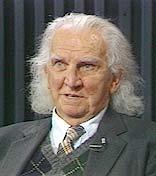
Kenneth E. Boulding
Kenneth E. Boulding

Kenneth E. Boulding was a renowned economist, born on January 18, 1910, and passed away on March 18, 1993. His research in economics covered a wide range of fields, particularly in general systems theory, conflict theory, and peace studies. more

You May Also Like

“In view of the importance of philanthropy in our society, it is surprising that so little attention has been given to it by economic or social theorists. In economic theory, especially, the subject is almost completely ignored. This is not, I think, because economists regard mankind as basically selfish or even because economic man is supposed to act only in his self-interest; it is rather because economics has essentially grown up around the phenomenon of exchange and its theoretical structure rests heavily on this process.”

“A somewhat casual observer from outer space might well deduce that the course of evolution in this planet had produced a species of large four-wheeled bugs with detachable brains; peculiar animals which rested when they sent their brains away from them but performed in rather predictable manner when their brains were recalled.”

“The concept of need is often looked upon rather unfavorably by economists, in contrast with the concept of demand. Both, however, have their own strengths and weaknesses. The need concept is criticized as being too mechanical, as denying the autonomy and individuality of the human person, and as implying that the human being is a machine which "needs" fuel in the shape of food, engine dope in the shape of medicine, and spare parts provided by the surgeon.”

“It [knowledge] is clearly related to information, which we can now measure; and an economist especially is tempted to regard knowledge as a kind of capital structure, corresponding to information as an income flow. Knowledge, that is to say, is some kind of improbable structure or stock made up essentially of patterns - that is, improbable arrangements, and the more improbable the arrangements, we might suppose, the more knowledge there is.”