“Every class of society has its cant of lamentation, which is understood or regarded by none but themselves; and every part of life has its uneasiness, which those who do not feel them will not commiserate. An event which spreads distraction over half the commercial world, assembles the trading companies in councils and committees, and shakes the nerves of a thousand stockjobbers, is read by the landlord and the farmer with frigid indifference.”
Quote by Samuel Johnson
Work
The Works of Samuel Johnson, LL.: D., with an Essay on His Life and Genius
This volume gathers the major literary and critical works of Samuel Johnson, the renowned 18th-century English writer, lexicographer, and moralist. The collection includes his essays, poems, and other prose, reflecting his influence on English letters. The accompanying essay provides a thoughtful overview of Johnson's life, his intellectual development, and his lasting literary legacy, offering readers context for understanding his contributions to literature and thought. more
Author
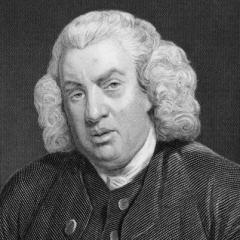
Samuel Johnson
Samuel Johnson was an English writer, poet, and lexicographer, renowned for his comprehensive English dictionary, 'A Dictionary of the English Language', published in 1755. His distinctive writing style and wit have cemented his place as a significant figure in the history of English literature. more
You May Also Like
Source: Johnsoniana: Or, Supplement to Boswell: Being Anecdotes and Sayings of Dr. Johnson
Source: The Wisdom of the Rambler, Adventurer, and Idler
Source: Lives of the British Poets: In Four Volumes
Source: Works: With an Essay on His Life and Genius
Source: The Rambler: In Four Volumes..
Source: The Works of Samuel Johnson, LL.D.: With An Essay on His Life and Genius
Source: The works of Samuel Johnson
“The most useful truths are always universal, and unconnected with accidents and customs.”
Source: The beauties of Samuel Johnson: maxims and observations. To which are now added, biographical anecdotes of the doctor, his life [&c.].
Source: The Rambler: A Periodical Paper, Published in 1750, 1751, 1752
Source: Works