Quotessence
Home / Quotes / Quote by Donald Hall

Quote by Donald Hall

“For a hundred and fifty years, in the pasture of dead horses, roots of pine trees pushed through the pale curves of your ribs, yellow blossoms flourished above you in autumn, and in winter frost heaved your bones in the ground--old toilers, soil makers: O Roger, Mackerel, Riley, Ned, Nellie, Chester, Lady Ghost.”

Quote by Donald Hall

Work

Old and New Poems: Donald Hall

This book is a compilation of poems written by Donald Hall, a renowned American poet. It includes both older and newer works, reflecting the evolution of his poetic style and themes throughout his career. more

Author
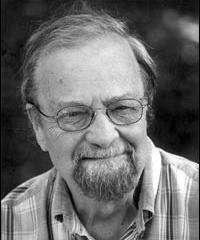
Donald Hall
Donald Hall

Donald Hall is a renowned American poet, born on September 20, 1928. His poetry is known for its simplicity, depth, and emotional richness, which has won him a wide audience. more

You May Also Like

“The frequency of personal questions grows in direct proportion to your increasing girth. . . . No one would ask a man such a personally invasive question as "Is your wife having natural childbirth or is she planning to be knocked out?" But someone might ask that of you. No matter how much you wish for privacy, your pregnancy is a public event to which everyone feels invited.”

“Both at-home and working mothers can overmeet their mothering responsibilities. In order to justify their jobs, working mothers can overnurture, overconnect with, and overschedule their children into activities and classes. Similarly, some at-home mothers,... can make at- home mothering into a bigger deal than it is, over stimulating, overeducating, and overwhelming their children with purposeful attention.”

“You may, or may not, have better child care instincts than your husband; but his can certainly be developed. If you don't respectthe natural parenting talents that each of you has, you may inadvertently cast the two of you into the skewed but complementary roles of the Expert and the Dumb Apprentice.”

“But the fact is that when wine is taken in moderation, it gives rise to a large amount of breath, whose character is balanced, and whose luminosity is strong and brilliant. Hence wine disposes greatly to gladness, and the person is subject to quite trivial exciting agents. The breath now takes up the impression of agents belonging to the present time more easily than it does those which relate to the future; it responds to agents conducive to delight rather than those conducive to a sense of beauty.”