Quotessence
Home / Quotes / Quote by Sylvia Ashton-Warner

Quote by Sylvia Ashton-Warner

Author

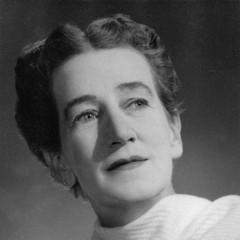
Sylvia Ashton-Warner

Sylvia Ashton-Warner was a New Zealand writer celebrated for her innovative and often controversial approach to literature. Born on December 17, 1908, she spent much of her life in New Zealand and Japan, where she taught English and developed her writing. Ashton-Warner's work is characterized by its psychological depth and exploration of complex human relationships. more

You May Also Like

“There is a sort of myth of History that philosophers have.... History for philosophers is some sort of great, vast continuity in which the freedom of individuals and economic or social determinations come and get entangled. When someone lays a finger on one of those great themes--continuity, the effective exercise of human liberty, how individual liberty is articulated with social determinations--when someone touches one of these three myths, these good people start crying out that History is being raped or murdered.”

“Sexuality is a part of our behavior. It's part of our world freedom. Sexuality is something that we ourselves create. It is our own creation, and much more than the discovery of a secret side of our desire. We have to understand that with our desires go new forms of relationships, new forms of love, new forms of creation. Sex is not a fatality; it's a possibility for creative life. It's not enough to affirm that we are gay but we must also create a gay life.”

“During the years 1945-1965 (I am referring to Europe), there was a certain way of thinking correctly, a certain style of politicaldiscourse, a certain ethics of the intellectual. One had to be on familiar terms with Marx, not let one's dreams stray too far from Freud.... These were therequirements that made the strange occupation of writing and speaking a measure of truth about oneself and one's time acceptable.”

“Philip Galanes has fashioned a novel both bleak and funny about a young man's struggle to sort out his troubled love: the too-strong love for his mother, the too-weak love for his suicidal father, and the all-consuming love of anonymous sexual encounters. Pointed and acute, this story tells of the narrator's many betrayals of others and their many betrayals of him. It exists in an uncomfortable moral space where the humor of terrible things sometimes outweighs, but never obscures, their poignancy.”