Quotessence
Home / Quotes / Quote by Judith Lewis Herman

Quote by Judith Lewis Herman

“It is regarded as axiomatic that parents have more power then children. This is an inescapable biological fact; young children are completely dependent on their parents or other caring adults for survival.”

Quote by Judith Lewis Herman

Work

Father-Daughter Incest

Browse quotes and source details for this work. more

Author
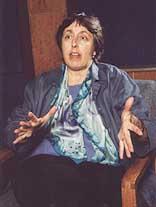
Judith Lewis Herman
Judith Lewis Herman

Judith Lewis Herman is an American author renowned for her work in the field of psychological trauma. Her writings delve deeply into the impact of post-traumatic stress disorder (PTSD) and the effects of traumatic experiences on individuals and society. more

You May Also Like

“Since most sexual abuse begins well before puberty, preventive education, if it is to have any effect at all, should begin early in grade school. Ideally, information on sexual abuse should be integrated into a general curriculum of sex education. In those communities where the experiment has been tried, it has been shown conclusively that children can learn what they most need to know about sexual abuse, without becoming unduly frightened or developing generally negative sexual attitudes. In Minneapolis, Minnesota, for example, the Hennepin County Attorney's office developed an education program on sexual assault for elementary school children. The program was presented to all age groups in four different schools, some eight hundred children in all. The presentation opened with a performance by a children’s theater group, illustrating the difference between affectionate touching, and exploitative touching. The children’s responses to the skits indicated that they understood the distinction very well indeed. Following the presentation, about one child in six disclosed a sexual experience with an adult, ranging from an encounter with an exhibitionist to involvement in incest. Most of the children, both boys and girls, had not told anyone prior to the classroom discussion. In addition to basic information on sexual relations and sexual assault, children need to know that they have the right to their own bodily integity.”

“You may experience waves of disbelief after each memory you retrieve. Whether as a phase or waves, the disbelief is usually accompanied by massive self-hate and guilt. ‘How can I even think such a thing? I must really be warped,’ you tell yourself.”

“Society gives the image of sexual violators as weird, ugly, anti-social, alcoholics. Society gives the impression that violators kidnap children are out of their homes and take them to some wooded area and abandon them after the violation. Society gives the impression that everyone hates people who violate children. If all of these myths were true, healing would not be as challenging as it is. Half of our healing is about the actual abuse. The other half is about how survivors fit into society in the face of the myths that people hold in order to make themselves feel safe. The truth is that 80% of childhood sexual abuse is perpetrated by family members. Yet we rarely hear the word “incest”. The word is too ugly and the truth is too scary. Think about what would happen if we ran a campaign to end incest instead of childhood sexual abuse. The number one place that children should know they are safe is in their homes. As it stands, as long as violators keep sexual abuse within the family, the chances of repercussion by anyone is pretty low. Wives won’t leave violating husbands, mothers won’t kick their violating children out of the home, and violating grandparents still get invited to holiday dinners. It is time to start cleaning house. If we stop incest first, then we will strengthen our cause against all sexual abuse.”

“Though all the daughters eventually succeeded in escaping from their families, they felt, even at this time of the interview (while in their 20s and 30s) that they would never be safe with their fathers, and that they would have to defend themselves as long as their fathers lived.”

“My mom called Grandma today and told her we would no longer be attending family parties. My mom told her we have had enough of being blamed for something Brian did and everyone brushing it off like it was no big deal.”

“If someone would have talked in school about safe touch and unsafe touch, I believe I would have spoken up as a child and not been victimized over and over again for years, but that day never came, which is why my mission now is to protect children from the childhood I could not be protected from.”

“When I first started to remember specific memories of abuse, I felt like I had a storm cloud over me for about two or three days beforehand. When the memory finally surfaced, I felt like I was alone in a dark cave. I stayed in bed just thinking and crying and eating chocolate. I wrote in my healing journal and talked it out with a friend. I examined what I thought and how I felt and cried some more. It was agonizing. The more issues I faced, the stronger I got. It wasn’t a pleasant process, but I knew it would be over in a few days and I would feel alive again. With each memory, I recovered faster and I had longer and longer breaks in between them. Facing them made me stronger. I was able to see more and more of the truth without it overwhelming me. Even though the memories increased in intensity, it was easier to deal with them.”

“The bridge out of shame is outrage. Suddenly the obvious becomes stunningly clear—we have been carrying shame for the crime of the offender…In a clear flash we may see ourselves standing in a fierce stance, grounded by our knowledge, ready to throw off any wrongdoer. Our outrage can be a fueling energy, capable of making us as steely as we need to be.”