Quotessence
Home / Quotes / Quote by Ricardo Nunes

Quote by Ricardo Nunes

“Personally I don't like labels: Brazil is huge and each part has its own specifics. Of course the climate influences how people dress, but even climate can be completely different in different parts of the country here. Like any other part of the world, jeans, T-shirt and sneakers are the uniform for kids in the big cities. As the streetwear scene evolves, people get more connected to global brands, thanks to Internet.”

Quote by Ricardo Nunes

Author
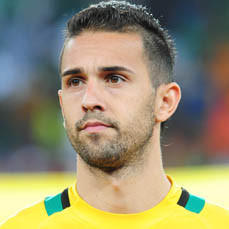
Ricardo Nunes
Ricardo Nunes

Ricardo Nunes, born on June 18, 1986, is an individual whose profession category is unknown. His life experience and achievements are currently limited in available information. more

You May Also Like

“Brasil used to have - and still has, in some ways - a strong culture of showing off. And that's not only in sneakers and streetwear. People like to show how much their sneakers cost, usually by rocking performance models with visible technology, like Nike Shox, adidas Springblade and ASICS Noosa. It's like a status symbol for someone that wants to show to the world they "succeeded in life," no matter how rich they actually are.”

“One of my favorite literary theorists, Mikhail Bakhtin, wrote that the defining characteristic of the novel is its unprecedented level of "heteroglossia" - the way it brings together so many different registers of language. He doesn't mean national languages, but rather the sublanguages we all navigate between every day: high language, low language, everything. I think there's something really powerful about the idea of the novel as a space that can bring all these languages together - not just aggregate them, like the Internet is so good at doing, but bring them into a dialogue.”

“Everyone is used to speaking a slightly different "language" with their parents than with their peers, because spoken language changes every generation - like they say, the past is a foreign country - but I think this is intensified for children whose parents also grew up in a geographically foreign country.”

“If you're writing a book where you want to make a positive truth claim, then you should absolutely call it nonfiction or memoir. If you don't want to make that claim - if that's not what's important to you; if you're more interested in storytelling and interiority and interpersonal relationships than in objective, checkable facts about the world - then why wouldn't you call it a novel, and take advantage of what that gets you, of the extra freedom, of belonging to the tradition of the novel?”

“I don't think anything can substitute long talks, and long talks are somehow never as easy to schedule again as they were in school, when most people - at least in my little socioeconomic corner of the world - live not with their families or sexual partners, but with same-sex friends. I really miss that from college. I never really thought at the time about how things would never be that way again.”

“If you think about Don Quixote, Don Quixote is this guy who wants to live as if he was in a medieval chivalric romance, when actually he lives in sixteenth-century Spain, which is already going through secularization, industrialization, modernization. He goes out to kill a giant, and instead he collides with this huge windmill and injures himself and also damages the windmill. I think that's a metaphor for the collisions we all have over time, as our ideas of ourselves get out of synch with the historical moment.”

“I thought clarity of communication was the most important thing in writing, and if you really cared about getting your idea across, you would say it in the most straightforward way possible. Later, in college and grad school, I came to realize that language is a technology like any other, and that it's always evolving - clarity of expression is always evolving.”