Quotessence
Home / Quotes / Quote by Juan Ramon Jimenez

Quote by Juan Ramon Jimenez

“Dynamic ecstasy is absolute romanticism , absolute heroism . And here I return to my point. From my point of view, after the catastrophe which we feel and think is universal, a catastrophe resulting from an excess of useless dynamism of useless progress, of useless realism, of useless technology, after this an unattainable democracy is to be reached through the conception and realization of a new romanticism.”

Quote by Juan Ramon Jimenez

Author
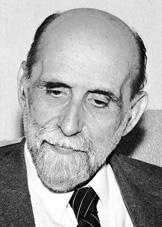
Juan Ramon Jimenez
Juan Ramon Jimenez

Juan Ramón Jiménez, born on December 23, 1881, was a renowned Spanish poet. His poetry is known for its profound emotions and unique style, which has had a profound impact on literature both in Spain and around the world. more

You May Also Like

“The American system demands success, and in order to succeed we must first believe that we can. Yet our society, with its intolerance of failure and poverty, traps millions of people in positions where any kind of success seems impossible to contemplate, and in which failure itself is a kind of passive rebellion against their own misery and the social system which created it in the first place. To succeed it is necessary to accept the world as it is and rise above it.”

“I imagine that as contemporary music goes on changing in the way that I'm changing it what will be done is to more and more completely liberate sounds from abstract ideas about them and more and more exactly to let them be physically uniquely themselves. This means for me: knowing more and more not what I think a sound is but what it actually is in all of its acoustical details and then letting this sound exist, itself, changing in a changing sonorous environment.”

“A sound does not view itself as thought, as ought, as needing another sound for its elucidation, as etc.; it has not time for any consideration--it is occupied with the performance of its characteristics: before it has died away it must have made perfectly exact its frequency, its loudness, its length, its overtone structure, the precise morphology of these and of itself.”

“There is laughter that goes so far as to lose all touch with its motive, and to exist only, grossly, in itself. This is laughter at its best. A man to whom such laughter has often been granted may happen to die in a work-house. No matter. I will not admit that he has failed in life. Another man, who has never laughed thus, may be buried in Westminster Abbey, leaving more than a million pounds overhead. What then? I regard him as a failure.”

“Has the gift of laughter been withdrawn from me? I protest that I do still, at the age of forty-seven, laugh often and loud and long. But not, I believe, so long and loud and often as in my less smiling youth. And I am proud, nowadays, of laughing, and grateful to any one who makes me laugh. That is a bad sign. I no longer take laughter as a matter of course.”

“Few, as I have said, are the humorists who can induce this state. To master and dissolve us, to give us the joy of being worn down and tired out with laughter, is a success to be won by no man save in virtue of a rare staying-power. Laughter becomes extreme only if it be consecutive. There must be no pauses for recovery. Touch-and-go humour, however happy, is not enough. The jester must be able to grapple his theme and hang on to it, twisting it this way and that, and making it yield magically all manner of strange and precious things.”