Quotessence
Home / Quotes / Quote by Bill Burr

Quote by Bill Burr

“I've found is that by doing stand-up, I've actually learned how to combat depression. I don't have clinical, but I've definitely had my bouts with it. I just figured out that it's a choice. You're in control of your brain. When your brain is sending you bad information or bad thoughts, you can decide to go to the gym, or write a new joke - or if you're on the road, go to a ball game... something that's going to get the blood going. Or you can let those thoughts take you right down the rabbit hole.”

Quote by Bill Burr

Author
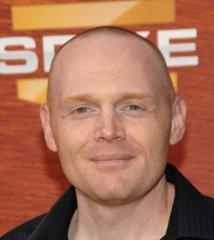
Bill Burr
Bill Burr

Bill Burr, born on June 10, 1968, is an influential American comedian. His career began in the 1990s, and he gained recognition in the comedy world with his unique humor style and satirical approach. Known for his sharp wit and poignant humor, Burr often appears in television shows, comedy specials, and comedy films. His work covers a wide range of topics, from social issues to political satire and everyday life, and has won him a dedicated fan base. 【Detailed biography】Bill Burr is an influential American comedian known for his unique humor style and incisive satire. His work often delves into social issues, political satire, and everyday life, earning him both laughter and thought from audiences. His comedy style is profound and incisive, capable of touching on the core of social phenomena. Although his humor can sometimes provoke controversy, Bill Burr is undoubtedly an influential comedian who has had a profound impact on the comedy world. more

You May Also Like

“All three parts of filmmaking [writing, shooting, editing] contribute to rhytm. You want the script to be a tight as possible, you want the acting to be as efficient as possible on the set, and you have enough coverage to manipulate the rhythm in the editing room, and then in the editing room you want to find the quickest possible version, even if it's a leisurely paced film. I definitely in filmmaking more and more find writing and directing a means to harvest material for editing. It's all about editing.”

“I don't think so much about verbal comedy. I always think about visual comedy. I was raised watching silents, and I'm always thinking about how to make cinema, not good talking - although I want good talking. I'm much more interested in framing, composition, and orchestration of bodies in space, and so forth. My goal is always what Chuck Jones wanted his Warner Brothers cartoons to be, which was if you turn down the sound, you could still tell what's going on. I think if you watch most of my films with the sound off, you could still tell what's going on.”

“My editor and I remain very disciplined. It's just sometimes when you're making a film, you get into the cutting room and you see a scene that's slowing you down in a certain section, but if you remove that scene then, emotionally or story-wise, another scene a half-hour later won't have the same impact. You just get stuck with it.”

“I could never be a part of an adaptation of a film where there's pressure to not disappoint the immense fan base. In those cases, they often wind up with filmed books on tape, quite uncinematic. Having said that, I'd say all the adaptations I've done are quite faithful to the original... You have to pick and choose which storylines and plot threads, because you don't have the time to kill in the film as they have in novels. All those pages with detours and plots and different storylines. But films add a lot, and you gotta keep it moving.”