Quotessence
Home / Quotes / Quote by George Porter

Quote by George Porter

“To solve a problem is to create new problems, new knowledge immediately reveals new areas of ignorance, and the need for new experiments. At least, in the field of fast reactions, the experiments do not take very long to perform.”

Quote by George Porter

Author
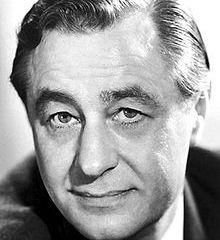
George Porter
George Porter

George Porter was an outstanding chemist known for his contributions to crystallography. Born on December 6, 1920, and passing away on August 31, 2002, Porter's work in crystallography, molecular structure analysis, and X-ray crystallography had a profound impact on chemistry and materials science. more

You May Also Like

“To stop short in any research that bids fair to widen the gates of knowledge, to recoil from fear of difficulty or adverse criticism, is to bring reproach on science. There is nothing for the investigator to do but go straight on, 'to explore up and down, inch by inch, with the taper his reason;' to follow the light wherever it may lead, even should it at times resemble a will-o'-the-wisp.”

“To this day, we see all around us the Promethean drive to omnipotence through technology and to omniscience through science. The effecting of all things possible and the knowledge of all causes are the respective primary imperatives of technology and of science. But the motivating imperative of society continues to be the very different one of its physical and spiritual survival. It is now far less obvious than it was in Francis Bacon's world how to bring the three imperatives into harmony, and how to bring all three together to bear on problems where they superpose.”

“Unanimity of opinion may be fitting for a church, for the frightened or greedy victims of some (ancient, or modern) myth, or for the weak and willing followers of some tyrant. Variety of opinion is necessary for objective knowledge. And a method that encourages variety is also the only method that is comparable with a humanitarian outlook.”

“We thus begin to see that the institutionalized practice of citations and references in the sphere of learning is not a trivial matter. While many a general reader-that is, the lay reader located outside the domain of science and scholarship-may regard the lowly footnote or the remote endnote or the bibliographic parenthesis as a dispensable nuisance, it can be argued that these are in truth central to the incentive system and an underlying sense of distributive justice that do much to energize the advancement of knowledge.”

“What the founders of modern science ... had to do, was not criticize and to combat certain faulty theories, and to correct or to replace them by better ones. They had to do something quite different. They had to destroy one world and replace it by another. They had to reshape the framework of our intellect itself, to restate and to reform its concepts, to evolve a new approach to Being, a new concept of knowledge, and a new concept of science - and even to replace a pretty natural approach, that of common sense, by another which is not natural at all.”