Quotessence
Home / Quotes / Quote by Paul Feyerabend

Quote by Paul Feyerabend

“Unanimity of opinion may be fitting for a church, for the frightened or greedy victims of some (ancient, or modern) myth, or for the weak and willing followers of some tyrant. Variety of opinion is necessary for objective knowledge. And a method that encourages variety is also the only method that is comparable with a humanitarian outlook.”

Quote by Paul Feyerabend

Work

Against method: outline of an anarchistic theory of knowledge

This book is a philosophical exploration that challenges conventional scientific methods, advocating for an anarchistic perspective on the acquisition of knowledge. more

Author
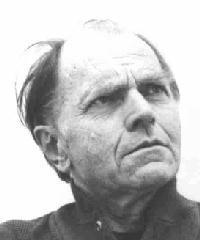
Paul Feyerabend
Paul Feyerabend

Paul Feyerabend was a prominent philosopher known for his significant contributions to the philosophy of science. His ideas have had a profound impact on methodology and epistemology in science. more

You May Also Like

“We thus begin to see that the institutionalized practice of citations and references in the sphere of learning is not a trivial matter. While many a general reader-that is, the lay reader located outside the domain of science and scholarship-may regard the lowly footnote or the remote endnote or the bibliographic parenthesis as a dispensable nuisance, it can be argued that these are in truth central to the incentive system and an underlying sense of distributive justice that do much to energize the advancement of knowledge.”

“What the founders of modern science ... had to do, was not criticize and to combat certain faulty theories, and to correct or to replace them by better ones. They had to do something quite different. They had to destroy one world and replace it by another. They had to reshape the framework of our intellect itself, to restate and to reform its concepts, to evolve a new approach to Being, a new concept of knowledge, and a new concept of science - and even to replace a pretty natural approach, that of common sense, by another which is not natural at all.”

“With crystals we are in a situation similar to an attempt to investigate an optical grating merely from the spectra it produces... But a knowledge of the positions and intensities of the spectra does not suffice for the determination of the structure. The phases with which the diffracted waves vibrate relative to one another enter in an essential way. To determine a crystal structure on the atomic scale, one must know the phase differences between the different interference spots on the photographic plate, and this task may certainly prove to be rather difficult.”

“The big idea we start with is: "How is the genome interpreted, and how are stable decisions that affect gene expression inherited from one cell to the next?" This is one of the most competitive areas of molecular biology at the moment, and the students are reading papers that in some instances were published this past year. As a consequence, one of the most common answers I have to give to their questions is, "We just don't know."”