“And grace that won who saw to wish her stay.”
Quote by John Milton
Work
The Poetical Works of John Milton: With Notes of Various Authors; and with Some Account of the Life and Writings of Milton, Derived Principally from Original Documents in Her Majesty's State-paper Office
The Poetical Works of John Milton is a comprehensive compilation of the poet's writings, enriched with scholarly annotations. The volume offers insights into Milton's life and literary contributions, drawing heavily from original documents held in the State-paper Office. more
Author
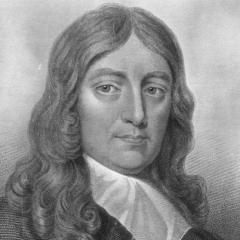
John Milton
John Milton, born on December 9, 1608, in London, and died on November 8, 1674, was a renowned English poet and scholar. He is best known for his epic poem 'Paradise Lost,' which has had a profound impact on world literature. more
You May Also Like
“Make three wishes and they shall all come true. Make three hundred and I will honour every one”
Source: Written On The Body
Source: Hippocrates
“CLOSE-FISTED, adj. Unduly desirous of keeping that which many meritorious persons wish to obtain.”
Source: The Devil's Dictionary: The Devil World
“Most of your suffering comes from the lack of understanding of yourself and others.”
Source: In Sierra Leone