“A staunch determinist might argue that between a magazine in a democratic country applying financial pressure to its contributors to make them exude what is required by the so-called reading public—between this and the more direct pressure which a police state brings to bear in order to make the author round out his novel with a suitable political message, it may be argued that between the two pressures there is only a difference of degree; but this is not so for the simple reason that there are many different periodicals and philosophies in a free country but only one government in a dictatorship. It is a difference in quality. If I, an American writer, decide to write an unconventional novel about, say, a happy atheist, an independent Bostonian, who marries a beautiful Negro girl, also an atheist, has lots of children, cute little agnostics, and lives a happy, good, and gentle life to the age of 106, when he blissfully dies in his sleep — it is quite possible that despite your brilliant talent, Mr. Nabokov, we feel [in such cases we don't think, we feel] that no American publisher could risk bringing out such a book simply because no bookseller would want to handle it. This is a publisher's opinion, and everybody has the right to have an opinion. Nobody would exile me to the wilds of Alaska for having my happy atheist published after all by some shady experimental firm; and on the other hand, authors in America are never ordered by the government to produce magnificent novels about the joys of free enterprise and of morning prayers.”
Quote by Vladimir Nabokov
Work
Lectures on Russian Literature
This book offers in-depth analysis and discussion of significant Russian literary texts and authors, providing a scholarly perspective on the evolution of Russian literature. more
Author
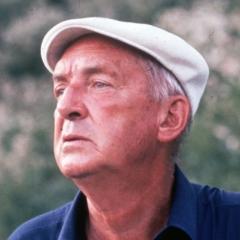
Vladimir Nabokov
Russian-born American novelist, best known for his novel 'Lolita'. Nabokov is renowned for his unique literary style and profound use of language and symbolism. more
You May Also Like
“You can’t be beaten by something you laugh at.”
Source: Freak
Source: Feet Of Clay
Source: Sinew of the Social Species
“The fear of offense is a really small price to pay for freedom.”
Source: Alif the Unseen
Source: Emilia Galotti
“Ability can take you to the top, but it takes character to keep you there”
Source: In the Woods