“A problem adequately stated is a problem solved theoretically and immediately, and therefore subsequently to be solved, realistically.”
Quote by R. Buckminster Fuller
Work
World Design Science Decade: Phase 1 Document 3
The book serves as a comprehensive document detailing the advancements and concepts in design science during the initial phase of the World Design Science Decade. It is intended for readers interested in the historical and theoretical aspects of design science. more
Author
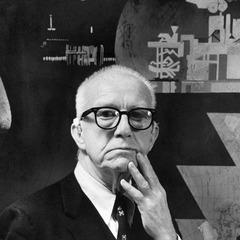
R. Buckminster Fuller
R. Buckminster Fuller, born on July 12, 1895, and died on July 1, 1983, was an American architect, designer, inventor, and philosopher. Known for his unique architectural ideas and contributions to sustainable development, Fuller is best known for his Dymaxion House and Geodesic Dome. His design philosophy emphasized efficiency, simplicity, and sustainability, having a profound impact on modern architecture and design. more
You May Also Like
“Brain deals exclusively with the physical, and mind exclusively with the metaphysical.”
Source: Operating Manual for Spaceship Earth
Source: Ideas and Integrities: A Spontaneous Autobiographical Disclosure
“Technology paces industry, but there's a long lag in the process.”
Source: World Design Science Decade: Phase 1 Document 3
Source: Operating Manual for Spaceship Earth
Source: Earth, Inc.