Quotessence
Home / Quotes / Quote by Cate Blanchett

Quote by Cate Blanchett

“You know, when you see yourself on a big screen, I tend to watch from behind my hands. There is absolutely the regret. You always get that at the end of every project. That's what's great about theater: at least every night you get the chance to go out and re-offend. I'm endlessly disappointed, which is what propels me into the next project, probably, not to repair the damage but to kind of hopefully keep developing. Otherwise there's no reason to keep doing it, is there?”

Quote by Cate Blanchett

Author
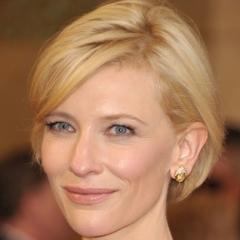
Cate Blanchett
Cate Blanchett

Cate Blanchett, born on May 14, 1969, is an internationally renowned Australian actress. Known for her unique acting style and versatility, she has won numerous international awards, including the Academy Award for Best Actress. Blanchett has starred in several classic films, such as the 'Lord of the Rings' trilogy and 'Blue Jasmine'. more

You May Also Like

“None of us older writers had gone through such a school. We are all self-taught. And, of course, there is always, in such a school, the danger of goose-stepping, uniformed ranks. But the Serapion Brethren have already, it seems to me, outgrown this danger. Each of them has his own individuality and his own handwriting. The common thing they have derived from the studio is the art of writing with ninety-proof ink, the art of eliminating everything that is superfluous, which is, perhaps, more difficult than writing.”

“Every artist of importance creates his own world, with its own laws - creates and shapes it in his own shape and image, and no one else's. This is why it is difficult to fit the artist into a world that has already been created, a seven-day, fixed and solidified world: he will inevitably slip out of the set of laws and paragraphs, he will be a heretic.”

“To the feudal aristocracy and the aristocracy of the spirit, nobility derives from diametrically opposite sources. The glory of the feudal aristocrat is in being a link in the longest possible chain of ancestors. The glory of the aristocrat of the spirit is in having no ancestors - or having as few as possible. If an artist is his own ancestor, if he has only descendents, he enters history as a genius; if he has few ancestors, or is related to them distantly, he enters history as a talent.”

“There are two generic and invariable features that characterize utopias. One is the content: the authors of utopias paint what they consider to be ideal societies; translating this into the language of mathematics, we might say that utopias bear a + sign. The other feature, organically growing out of the content, is to be found in the form: a utopia is always static; it is always descriptive and has no, of almost no, plot dynamics.”