Quotessence
Home / Quotes / Quote by Yevgeny Zamyatin

Quote by Yevgeny Zamyatin

“The next stage of development, perhaps in the distant future, will be a social order under which there will be no need for the coercive power of the state.”

Quote by Yevgeny Zamyatin

Author
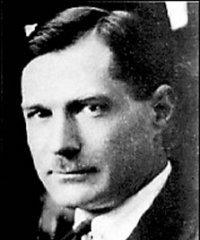
Yevgeny Zamyatin
Yevgeny Zamyatin

Russian author known for his dystopian novel 'We'. Born on February 1, 1884, in Taganrog, Russia, he passed away on March 10, 1937. more

You May Also Like

“None of us older writers had gone through such a school. We are all self-taught. And, of course, there is always, in such a school, the danger of goose-stepping, uniformed ranks. But the Serapion Brethren have already, it seems to me, outgrown this danger. Each of them has his own individuality and his own handwriting. The common thing they have derived from the studio is the art of writing with ninety-proof ink, the art of eliminating everything that is superfluous, which is, perhaps, more difficult than writing.”

“Every artist of importance creates his own world, with its own laws - creates and shapes it in his own shape and image, and no one else's. This is why it is difficult to fit the artist into a world that has already been created, a seven-day, fixed and solidified world: he will inevitably slip out of the set of laws and paragraphs, he will be a heretic.”

“To the feudal aristocracy and the aristocracy of the spirit, nobility derives from diametrically opposite sources. The glory of the feudal aristocrat is in being a link in the longest possible chain of ancestors. The glory of the aristocrat of the spirit is in having no ancestors - or having as few as possible. If an artist is his own ancestor, if he has only descendents, he enters history as a genius; if he has few ancestors, or is related to them distantly, he enters history as a talent.”

“There are two generic and invariable features that characterize utopias. One is the content: the authors of utopias paint what they consider to be ideal societies; translating this into the language of mathematics, we might say that utopias bear a + sign. The other feature, organically growing out of the content, is to be found in the form: a utopia is always static; it is always descriptive and has no, of almost no, plot dynamics.”

“In adopting the form of the adventure novel, Wells deepened it, raised its intellectual value, and brought into it elements of social philosophy and science. In his own field - though, of course, on a proportionately lesser scale - Wells may be likened to Dostoyevsky, who took the form of the cheap detective novel and infused it with brilliant psychological analysis.”