“As Strauss demonstrated with inescapable lucidity many decades ago, the two nativity stories of Matthew and Luke disagree at almost every point, one exception being the location of Jesus' birth in Bethlehem. [...] Matthew assumes Jesus was born in the home of Mary and Joseph in Bethlehem, and that they only relocated to Nazareth in Galilee after taking off for Egypt to avoid Herod the Great's persecution. Luke knows nothing of this but instead presupposes that Mary and Joseph lived in Galilee and "happened" to be in Bethlehem when the hour struck for Jesus' birth because the Holy Couple had to be there to register for a Roman taxation census. [...] For the moment, my point is to suggest that Luke and Matthew both seem to have been winging it, just as they did with their genealogies. They began with an assumption and tried to connect the dots. This time, their common assumption was that Jesus was born in Bethlehem. Whence this assumption? Was there historical memory that Jesus was born there? Hardly; if there had been, we cannot account for Mark's utter lack of knowledge of the fact. No, it seems much more natural, much less contrived, to suggest that Matthew and Luke alike simply inferred from their belief in Jesus' Davidic lineage that he must have been born in Bethlehem. [...] Matthew and Luke both placed the birth of Jesus in Bethlehem because they mistakenly thought prophecy demanded it. They went to work trying to connect the dots with narrative or historical verisimilitude, but with limited success.”
Quote by Robert M. Price
Work
The Incredible Shrinking Son of Man: How Reliable is the Gospel Tradition?
Browse quotes and source details for this work. more
Author
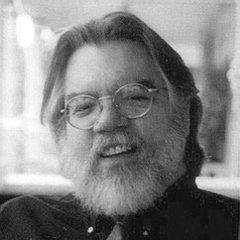
Robert M. Price
Robert M. Price is an American writer known for his critical studies of religion and mythology. His work spans a variety of fields, including biblical studies, Christian theology, and literary criticism. more
You May Also Like
Source: The Great Night
“I’m just a common girl wanting to be someone’s Cinderella, hoping that the shoe fits only me.”
Source: Together we were
Source: Betraying Innocence
Source: The Last Leaf Of Autumn: Barefoot and falling, infinity is a number that has none to end
Source: Always Yours, Baby
Source: Alien Fae Mate
Source: Merry Christmas, Baby