“The office of reformer of the superstitions of a nation, is ever more dangerous. Jesus had to work on the perilous confines of reason and religion; and a step to the right or left might place him within the grasp of the priests of the superstition, a bloodthirsty race, as cruel and remorseless as the being whom they represented as the family God of Abraham, of Isaac and of Jacob, and the local God of Israel. That Jesus did not mean to impose himself on mankind as the son of God, physically speaking, I have been convinced by the writings of men more learned than myself in that lore.”
Quote by Thomas Jefferson
Author
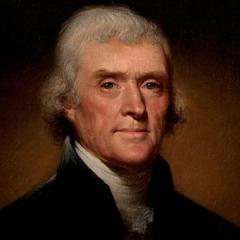
Thomas Jefferson
Thomas Jefferson was the third President of the United States, a distinguished politician, philosopher, architect, and scientist. He was born on April 13, 1743, and died on July 4, 1826. Jefferson advocated for democracy and freedom in politics and was one of the main authors of the Declaration of Independence. His political ideas had a profound impact on the founding and development of the United States. more
You May Also Like
Source: Jefferson: Political Writings
Source: The portable Thomas Jefferson
Source: Jefferson on Freedom: Wisdom, Advice, and Hints on Freedom, Democracy, and the American Way
Source: The writings of Thomas Jefferson: being his autobiography, correspondence, reports, messages, addresses, and other writings, official and private
Source: The writings of Thomas Jefferson
Source: The Works of Thomas Jefferson: Correspondence 1771 - 1779, the Summary View, and the Declaration of Independence
Source: The portable Thomas Jefferson