Quotessence
Home / Quotes / Quote by Philip Freneau

Quote by Philip Freneau

“At sea let the British their neighbours defy — The French shall have frigates to traverse the sky.”

Quote by Philip Freneau

Author
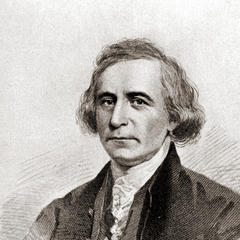
Philip Freneau
Philip Freneau

Philip Freneau (1752-1832) was an American poet, widely known as the "Poet of the American Revolution." Born in New Jersey, he received classical education at Princeton University. Freneau composed passionate patriotic poems that inspired colonial resistance during the Revolutionary War. He also worked as a teacher, sea captain, and newspaper publisher. His works, celebrating liberty and criticizing British tyranny, became influential in shaping American national identity. more

You May Also Like

“I may be expediting the attainment of an object that will in time be found of great importance to mankind; so much so, that a new era in society will commence from the moment that aerial navigation is familiarly realised. . . . I feel perfectly confident, however, that this noble art will soon be brought home to man's convenience, and that we shall be able to transport ourselves and our families, and their goods and chattels, more securely by air than by water, and with a velocity of from 20 to 100 miles per hour.”

“Railroad carriages are pulled at the enormous speed of fifteen miles per hour by engines which, in addition to endangering life and limb of passengers, roar and snort their way through the countryside, setting fire to the crops, scaring the livestock, and frightening women and children. The Almighty certainly never intended that people should travel at such break-neck speed.”

“For I dipt into the future, far as human eye could see, Saw the vision of the world, and all the wonder that would be; Saw the heavens fill with commerce, Argosies of magic sails, Pilots of the purple twilight, dropping down with costly bales; Heard the heavens fill with shouting, and there rain'd a ghastly dew, From the nations' airy navies grappling in the central blue.”

“In spite of the opinions of certain narrow-minded people who would shut up the human race upon this globe, we shall one day travel to the Moon, the planets, and the stars with the same facility, rapidity and certainty as we now make the ocean voyage from Liverpool to New York.”

“In this age of inventive wonders all men have come to believe that in some genius' brain sleeps the solution of the grand problem of aerial navigation-and along with that belief is the hope that that genius will reveal his miracle before they die, and likewise a dread that he will poke off somewhere and die himself before he finds out that he has such a wonder lying dormant in his brain. We all know the air can be navigated-therefore, hurry up your sails and bladders-satisfy us-let us have peace.”

“And then, the Earth being small, mankind will migrate into space, and will cross the airless Saharas which separate planet from planet and sun from sun. The Earth will become a Holy Land which will be visited by pilgrims from all the quarters of the Universe. Finally, men will master the forces of Nature; they will become themselves architects of systems, manufacturers of worlds.”

“I hold that in the flight of the soaring birds (the vultures, the eagles, and other birds which fly without flapping) ascension is produced by the skillful use of the force of the wind, and the steering, in any direction, is the result of skillful manoeuvres; so that by a moderate wind a man can, with an aeroplane, un- provided with any motor whatever, rise up into the air and direct himself at will, even against the wind itself.”