“The nephew revenges himself for this, by holding his breath and terrifying his kinswoman with the dread belief that he has made up his mind to burst. Regardless of whispers and shakes, he swells and becomes discoloured, and yet again swells and becomes discoloured, until the aunt can bear it no longer, but leads him out, with no visible neck, and with his eyes going before him like a prawn's.”
Quote by Charles Dickens
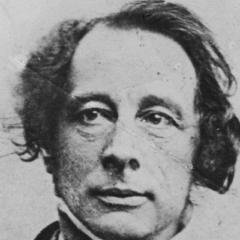
Charles DickensCharles Dickens, a British writer born on February 7, 1812, and died on June 9, 1870, is one of the greatest novelists of the 19th century. Known for his profound social criticism and vivid narrative style, Dickens' works extensively cover social reality, revealing various issues in the British society of the time. more
“Ven you read the speeches in the papers, and see as vun gen'lman says of another, 'the Honourable member, if he vill allow me to call him so' you vill understand, sir, that that means, 'if he vill allow me to keep up that 'ere pleasant and uniwersal fiction.'”
Source: The Complete Works of Charles Dickens: Edwin Drood and Miscellaneous
“His wardrobe was extensive-very extensive-not strictly classical perhaps, not quite new, nor did it contain any one garment made precisely after the fashion of any age or time, but everything was more or less spangled; and what can be prettier than spangles!”
Source: Charles Dickens: The Complete Christmas Novels & Tales (Illustrated): 30 Classics in One Volume: A Christmas Carol, The Battle of Life, The Chimes, Oliver Twist, Tom Tiddler's Ground, The Holly-Tree, Doctor Marigold, The Pickwick Papers, Great Expectations and more
“"Ah, Miss, hope is an excellent thing for such as has the spirits to bear it!" said Mrs Wickam, shaking her head. "My own spirits is not equal to it, but I don't owe it any grudge. I envys them that is so blest!"”
Source: Dombey and Son
“Poetry's unnat'ral; no man ever talked poetry 'cept a beadle on boxin' day, or Warren's blackin' or Rowland's oil, or some o' them low fellows; never you let yourself down to talk poetry, my boy.”
“Dombey sat in the corner of the darkened room in the great arm-chair by the bedside, and Son lay tucked up warm in a little basket bedstead, carefully disposed on a low settee immediately in front of the fire and close to it, as if his constitution were analogous to that of a muffin, and it was essential to toast him brown while he was very new.”
Source: Dombey and Son
“"Well," said my aunt, "this is his boy - his son. He would be as like his father as it's possible to be, if he was not so like his mother, too."”
Source: The Works of Charles Dickens
“"Vell," said Mr. Weller, "Now I s'pose he'll want to call some witnesses to speak to his character, or p'raps to prove a alleybi. I've been a turnin' the bis'ness over in my mind, and he may make his-self easy, Sammy. I've got some friends as'll do either for him, but my adwice 'ud be this here-never mind the character, and stick to the alleybi. Nothing like a alleybi, Sammy, nothing."”
Source: The posthumous papers of the Pickwick Club
“Poor Mr. Pickwick! ... If he played a wrong card, Miss Bolo looked a small armoury of daggers; if he stopped to consider which was the right one, Lady Snuphanuph would throw herself back in her chair, and smile with a mingled glance of impatience and pity to Mrs. Colonel Wugsby, at which Mrs. Colonel Wugsby would shrug up her shoulders, and cough, as much as to say she wondered whether he ever would begin.”
Source: THE GREATEST DICKENS CLASSICS (Illustrated Edition): Oliver Twist, The Pickwick Papers, Great Expectations, A Tale of Two Cities, Hard Times, David Copperfield, A Christmas Carol, Bleak House, Little Dorrit, Our Mutual Friend, The Life of Dickens
“Then, at the end of every hand, Miss Bolo would inquire with a dismal countenance and reproachful sigh, why Mr. Pickwick had not returned that diamond, or led the club, or roughed the spade, or finessed the heart, or led through the honour, or brought out the ace, or played up to the king, or some such thing; and in reply to all these grave charges, Mr. Pickwick would be wholly unable to plead any justification whatever, having by this time forgotten all about the game.”
Source: The posthumous papers of the Pickwick Club
“... still his philanthropy was of that gunpowderous sort that the difference between it and animosity was hard to determine.”
Source: THE MYSTERY OF EDWIN DROOD, MASTER HUMPHREY'S CLOCK, AND SKETCHES BY