“The very power of [textbook writers] depends on the fact that they are dealing with a boy: a boy who thinks he is ‘doing’ his ‘English prep’ and has no notion that ethics, theology, and politics are all at stake. It is not a theory they put into his mind, but an assumption, which ten years hence, its origin forgotten and its presence unconscious, will condition him to take one side in a controversy which he has never recognized as a controversy at all.”
Quote by C. S. Lewis
Author
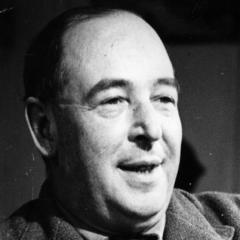
C. S. Lewis
C. S. Lewis was a British novelist, academic, and Christian theologian. He is renowned for his fictional works, particularly The Chronicles of Narnia, a series of fantasy novels that have become a beloved classic of children's literature. Lewis also penned adult fiction, including the science fiction trilogy Out of the Silent Planet and the space trilogy. His non-fiction works, such as Mere Christianity and The Problem of Pain, have had a significant impact on Christian thought and spirituality. more
You May Also Like
Source: A Mind Awake: An Anthology of C. S. Lewis
“Ask any comedian, tennis player, chef. Timing is everything.”
Source: Just in Case
Source: Bite Me
“Just because you have a choice, it doesn't mean that any of them 'has' to be right.”
“You can't go back to how things were. How you thought they were. All you really have is...now.”
Source: Thirteen Reasons Why 10th Anniversary Edition