Quotessence
Home / Quotes / Quote by Richard Rodriguez

Quote by Richard Rodriguez

“The Indians had to be either killed, or herded into reservations, which were essentially concentration camps, and forgotten. Their history had to be absolutely obliterated so that we could believe that we were living on virgin soil.”

Quote by Richard Rodriguez

Author
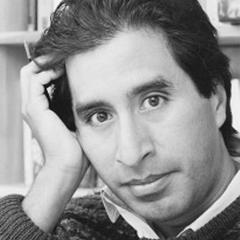
Richard Rodriguez
Richard Rodriguez

Richard Rodriguez is an American writer born on July 31, 1944. His works primarily explore issues of identity, culture, and class, particularly the experiences of Latinos in American society. Rodriguez is known for his profound social commentary and literary talent. more

You May Also Like

“Suddenly the land is haunted by all these dead Indians. There is this new fascination with the Southwest, with places like Santa Fe, New Mexico, where people come down from New York and Boston and dress up as Indians. When I go to Santa Fe, I find real Indians living there, but they are not involved in the earth worship that the American environmentalists are so taken by. Many of these Indians are interested, rather, in becoming Evangelical Christians.”

“What has happened in the last generation is that Tijuana has become a new Third World capital - much to the chagrin of Mexico City, which is more and more aware of how little it controls Tijuana politically and culturally. In addition to whorehouses and discos, Tijuana now has Korean factories and Japanese industrialists and Central American refugees, and a new Mexican bourgeoisie that takes its lessons from cable television.”

“There is San Diego - this retirement village, with its prim petticoat, that doesn't want to get too near the water. San Diego worries about all the turds washing up on the lovely, pristine beaches of La Jolla. San Diego wishes Mexico would have fewer babies. And San Diego, like the rest of America, is growing middle-aged.”

“The average age in the U.S. is now thirty-three, whereas Mexico gets younger and younger, retreats deeper and deeper into adolescence. Mexico is fifteen. Mexico is wearing a Hard Rock Cafe T-shirt and wandering around Tijuana looking for a job, for a date, for something to put on her face to take care of the acne.”

“It is not simply that these two cities are perched side by side at the edge of the Pacific; it is that adolescence sits next to middle age, and they don't know how to relate to each other. In a way, these two cities exist in different centuries. San Diego is a post-industrial city talking about settling down, slowing down, building clean industry. Tijuana is a preindustrial city talking about changing, moving forward, growing. Yet they form a single metropolitan area.”

“Maybe the American Dream is too rich for us now in the U.S. Maybe we're losing it because we are not like our Swedish grandmother who came across the plains, hacked down the trees, and took the Spanish words she encountered and made them hers. Now her great-great-grandchildren sit terrified, wondering what to do with all these Mexicans. The American Dream is an impossible affirmation of possibility. And maybe native-born Americans don't have it anymore. Maybe it has run through their fingers.”

“Those people who say that America is finite are some sense right. The environmental movement, for example, has a great wisdom to it: we need to protect, to preserve, to shelter as much as we need to develop. But I think this always has to be juxtaposed against the optimism of old, which is now represented in part by immigrants. I would like to see America achieve a kind of balance between optimism and tragedy, between possibility and skepticism.”

“America has never had a very wide vocabulary for miscegenation. We say we like diversity, but we don't like the idea that our Hispanic neighbor is going to marry our daughter. America has nothing like the Spanish vocabulary for miscegenation. Mulatto, mestizo, Creole - these Spanish and French terms suggest, by their use, that miscegenation is a fact of life. America has only black and white. In eighteenth-century America, if you had any drop of African blood in you, you were black.”