Quotessence
Home / Quotes / Quote by Victor Hugo

Quote by Victor Hugo

“I believe, sir, in all the progress. Air navigation is the result of the oceanic navigation: from water the human has to pass in the air. Everywhere where creation will be breathable to him, the human will penetrate into the creation. Our only limit is life.”

Quote by Victor Hugo

Author
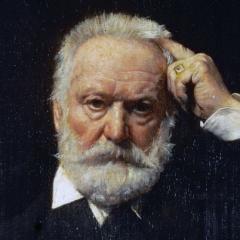
Victor Hugo
Victor Hugo

Victor Hugo, a French romantic poet, novelist, and playwright, was born on February 26, 1802, and died on May 22, 1885. He is considered one of the greatest writers in French literary history, known for his profound humanistic concerns and rich imagination. more

You May Also Like

“Well, gentlemen, do you believe in the possibility of aerial locomotion by machines heavier than air? ... You ask yourselves doubtless if this apparatus, so marvellously adapted for aerial locomotion, is susceptible of receiving greater speed. It is not worth while to conquer space if we cannot devour it. I wanted the air to be a solid support to me, and it is. I saw that to struggle against the wind I must be stronger than the wind, and I am.”

“I had no need of sails to drive me, nor oars nor wheels to push me, nor rails to give me a faster road. Air is what I wanted, that was all. Air surrounds me as water surrounds the submarine boat, and in it my propellers act like the screws of a steamer. That is how I solved the problem of aviation. That is what a balloon will never do, nor will any machine that is lighter than air.”

“But we must admit the possibility that continued investigation and experience will bring us ever nearer to that solemn moment, when the first man will rise from earth by means of wings, if only for a few seconds, and mark that historical moment which heralds the inauguration of a new era in our civilization.”

“Now my playmates never failed to wink and smile mockingly at me when one of them called 'Man flies!' for at the word I would always lift my finger very high, as a sign of absolute conviction; and I refused with energy to pay the forfeit. The more they laughed at me, the happier I was, hoping that some day the laugh would be on my side.”

“As the journalists of the time phased it, this was the epoch of the Leap into the Air. The new atomic aeroplane became indeed a mania; everyone of means was frantic to possess a thing so controllable, so secure and so free from the dust and danger of the road, and in France in the year 1943 thirty thousand of these new aeroplanes were manufactured and licensed, and soared humming softly into the sky.”

“There is no theory that would guide us through interplantary space to another world even if we could control our departure from the earth; there is no means of carrying the large amount oxygen, water, and food that would be necessary for such a long journey; and there is not known way of easing our ether ship down on the surface of another world, if we could get there.”

“It is about a period in aviation which is now gone, but which was probably more interesting than any the future will bring. As time passes, the perfection of machinery tends to insulate man from contact with the elements in which he lives. The 'stratosphere' planes of the future will cross the ocean without any sense of the water below. Like a train tunneling through a mountain, they will be aloof from both the problems and the beauty of the earth's surface.”

“Using an artful tool does not make one a dry technician. It seems to me that people that are anxious about our technical advancement, confuse means and ends. Naturally a person that only works for material gain will not harvest something that is worth living for. But the machine is not an end in itself. The airplane is not an end. It is a tool. Just like the plough.”

“When we think that the machine will harm man, then it is perhaps because we are not yet capable of judging the rapid changes it has brought about. We hardly feel at home in this landscape of mines and power stations. We have just moved into this new home that we have not even finished yet. Everything around us has changed so fast - personal relations, working conditions, habits. Even our state of mind is in turmoil.”

“We are all youthful barbarians, and only our new toys bring us excitement. That has been the sole purpose of our flights. This one flies higher, that one faster. But now we will make ourselves at home. We will forget the machine, the tool. It is no longer complex; it does what it is supposed to do, unnoticed. And through this tool we will find again the old nature, the nature of the gardener, the navigator, the poet.”