Quotessence
Home / Quotes / Quote by May Sinclair

Quote by May Sinclair

“In the last death we shall be shut up in this room, behind that locked door, together. We shall lie here together, for ever and ever, joined so fast that even God can't put us asunder. We shall be one flesh and one spirit, one sin repeated for ever, and ever; spirit loathing flesh, flesh loathing spirit; you and I loathing each other.' 'Why? Why?' she cried. 'Because that's all that's left us. That's what you made of love.”

Quote by May Sinclair

Work

Where Their Fire Is Not Quenched

Browse quotes and source details for this work. more

Author
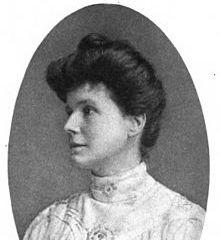
May Sinclair
May Sinclair

May Sinclair, a British writer born on August 24, 1863, and died on November 14, 1946. She is known for her works in various genres including novels, poetry, and drama, and is celebrated for her unique literary style and profound portrayal of female characters. more

You May Also Like

“This is, indeed, an insightful observation. The Archbishop [Joseph L. Berardin] insists that the natural resemblance between Christ and his priests must not stop merely with the fact that they share a common masculinity. Our question is, 'Why must it BEGIN there?' If the faithful cannot see Christ in a male who exemplifies no godlike virtues - humility, gentleness, and self-effacing service - can they not see him in a female who does? Indeed, if the priest acts 'in persona Christi,' not 'in masculinitate Christi,' then 'NATURAL resemblance' between Christ and the priest, it would seem, does not entail PHYSICAL, that is SEXUAL resemblance, but a resemblance which is natural to the SPIRITUAL order with which the worshiping congregation has to do. And in this order there is neither male nor female, even as there is neither Jew nor Greek. We would, therefore, conclude that since the Word was made flesh, as the apostle John has declared him (John 1:14), we rightly heed those who, in the flesh, symbolize his presence as they speak and act in his name. But we see no reason to add to what the apostle said by insisting that the Word was made MALE flesh, for both male and female are equally bearers of the divine image. And since God created humankind in his image, male AND female, we can only conclude that women as well as men should be ordained to the priesthood, because femaleness, like maleness, is a fitting symbol (sacramental sign) of Deity.”

“VETE ADENTRO Allí, y sólo allí, hallarás las respuestas que buscas. La experiencia de otro puede ser tocada, sin embargo solamente la verdad dentro de ti puede ser sentida. ¿La sientes? Háblale a tu corazón, y fluye dentro del río de tu Alma. El agua del interior te bañará para liberarte verdaderamente. Saltando en las aguas, no dejes que las profundidades te atemoricen, ni las respuestas te asusten. Pues aquí tú eres el niño que nacerá – Despierta querido mío.”

“शादी का खलिहान लड़की मुस्कुराई और बोली: यह सोना क्या है अंगूठी का रहस्य, इस अंगूठी का रहस्य ट्रंक है मैं अपनी उंगली पर बैठा था, इस अंगूठी का रहस्य शर्मीली और इतनी प्यारी क्या है? युवक बहुत हैरान हुआ और बोला: यह अंगूठी भाग्यशाली है, जीवन की अंगूठी है। सभी ने कहा: बधाई हो और अच्छा हो! लड़की ने कहा: काश! मुझे अभी भी संदेह है कि यह उंगली का कारण है। कई साल बीत गए, और एक और रात जल्दी में एक महिला ने सोने की अंगूठी देखी और उनके खूबसूरत डिजाइन में देखा पति की वफादारी की उम्मीद में खोए दिन, दिन के बाद दिन पूरी तरह से बर्बाद हो गया महिला ने फूट-फूट कर रोई: ओह, यह अंगूठी है अभी भी अस्थिर और अस्थिर यह दासता और बंधन है।”

“The next stage is a hornfels, a thoroughly recrystallized rock, so named after its supposed resemblance to animal horn. Hornfels has one rather unexpected quality—when suitably shaped, it can produce beautiful musical notes when struck. Indeed, it took central place in an extraordinary narrative of the English Lake District. An eccentric 18th-century inventor, Peter Crosthwaite—a fighter against Malay pirates in his youth and, later in life, the founder of a museum in the town of Keswick—built a kind of xylophone using hornfels from the local Skiddaw mountain. Half a century later, the Keswick stone-maker and musician Joseph Richardson determined to top Crosthwaite’s achievement, and almost ruined his family financially by building an even bigger instrument, which would produce a larger range of musical notes. Once built, though, it was indeed a sensation. Richardson toured England for three years with his sons, playing Handel, Mozart, and dance tunes on his rock creation—though at times restraining the power of the instrument so it would not shatter concert hall windows. Queen Victoria liked the performances so much that she requested extra concerts (although reports from the time do suggest that she was not amused at its imitation of Alpine bells). The harmonious hornfels ‘lithophones’ may still be seen in the Keswick museum—and are to this day occasionally taken on musical tour.”