Quotessence
Home / Quotes / Quote by Wendell Berry

Quote by Wendell Berry

“How would you describe the difference between modern war and modern industry-between say, bombing and strip mining, or between chemical warfare and chemical manufacturing? The difference seems to be only that in war the victimization of humans is directly intentional and in industry it is "accepted" as a "trade-off." Were the catastrophes of Love Canal, Bhopal, Chernobyl, and the Exxon Valdez episodes of war or of peace? They were in fact, peacetime acts of aggression, intentional to the extent that the risks were known and ignored.”

Quote by Wendell Berry

Author
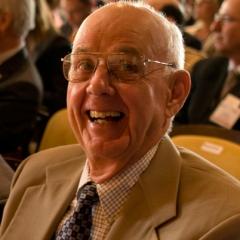
Wendell Berry
Wendell Berry

Wendell Berry, an American novelist born on August 5, 1934, is renowned for his profound descriptions of rural life and his critical views on modern industrial civilization. more

You May Also Like

“I find man utterly unaware of what his wealth is or his fundamental capability is. He says time and again, "We can't afford it." For instance, we are saying now that we can't afford to do anything about pollution but after the costs of not doing something about pollution have multiplied many fold beyond what it would cost to correct it now, we will spend many fold what it would cost us now to correct it.”

“Here in the United States, a study of nearly 700 women in California showed an increased risk of fetal death among babies whose mothers lived near crops when certain pesticides were sprayed. The largest risks were found among pregnant women exposed during the critical first trimester and among those who lived in the same square mile where pesticides were used.”

“Industrialized countries have disproportionately more cancers than countries with little or no industry (after adjusting for age and population size). One half of all the world's cancers occur in people living in industrialized countries, even though we are only one-fifth of the world's population. Closely tracking industrialization are breast cancer rates, which are highest in North America and northern Europe, intermediate in southern Europe and Latin America, and lowest in Asia and Africa.”

“Man was the outlaw, the rebel, the distorted shape that scarred the earth, the voice that silenced the music of Eden, the hand that raised up obscenities and blasphemies. Man was the pariah-dog, the moral leper in this translucent mirror of Heaven. He was the muddier of crystal waters, the despoiler of forests, the murderer of the innocent, the challenger against God. He was the assassin of the saints and the prophets, for they spoke of what he WOULD NOT HEAR, in the darkness of his spirit!”

“Man, especially in our time, has without hesitation devastated wooded plains and valleys, polluted waters, disfigured the earth's habitat, made the air unbreathable, disturbed the hydro-geological and atmospheric systems, turned luxuriant areas into deserts and undertaken forms of unrestrained industrialization, degrading that 'flower bed'-which is the earth, our dwelling place.”

“The study of how substances alter gene expression is part of the field of epigenetics. Some chemical exposures appear to turn on and turn off genes in ways that disregulate cell growth and predispose for cancer. From this perspective, our genes are less the command-and-control masters of our cells and more like the keys of piano, with the environment as the hands of the pianist.”

“The military is the largest polluter in the country, and so you have a lot of military waste contaminating reservations - as, for example, on the Skull Valley Goshute Reservation, where 5,000 sheep died in some kind of experimental military nerve gas test 10 years ago. Many of our communities are dealing with that kind of waste, and an absence of political will to clean them up.”

“Uranium mining in northern Canada has left over 120 million tons of radioactive waste. This amount represents enough material to cover the Trans-Canada Highway two meters deep across the country. Present production of uranium waste from Saskatchewan alone occurs at the rate of over 1 million tons annually. Since 1975, hospitalization for cancer, birth defects and circulatory illnesses in that area have increased dramatically - between 123 and 600 percent in that region.”

“Very few people would choose to have even the most fabled assortment of goods if it meant getting cancer within the year. But the choice involves not the certainty of cancer very soon but an increased probability of cancer at some time in the future. The cancers are no less real; millions will die painfully and prematurely because of what we do to our environment. But the choice is not an easily visualizable one, and our capacity of denial comes strongly into play - as it tends to whenever we must weigh future costs against immediate benefits.”