Quotessence
Home / Quotes / Quote by Dorothea Tanning

Quote by Dorothea Tanning

Author

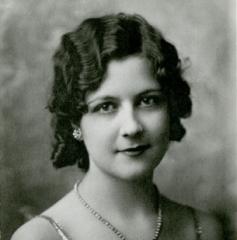
Dorothea Tanning
Dorothea Tanning

Dorothea Tanning, born on August 25, 1910, was an influential American painter. Her artistic career spanned over half a century, and she is best known for her unique style and her impact on the Surrealist movement. Her works blend realism with abstraction, filled with dreamlike colors and symbolic imagery. more

You May Also Like

“You try to sit down at approximately the same time every day. This is how you train your unconscious to kick in for you creatively. ... You put a piece of paper in the typewriter, or you turn on your computer and bring up the right file. ... You begin rocking, just a little at first, and then like a huge autistic child. ... Then your mental illnesses arrive at the desk like your sickest, most secretive relatives. And they pull up chairs in a semicircle around the computer, and they try to be quiet but you know they are there with their weird coppery breath, leering at you behind your back.”

“The only thing I can say that is not bullshit is that you do have to learn to write in a way that you would learn to play the violin. Everybody seems to think that you should be able to turn on the faucet one day and out will come the novel. I think for most people it's just practice, practice, practice, that sense of just learning your instrument until - when you have an idea on the violin, you don't have to translate it into violin-speak anymore - the language is your own. It's not something you can think your way into, or outsmart. you've just got to do it.”

“An author, like any other so-called artist, is a man in whom the normal vanity of all men is so vastly exaggerated that he finds it a sheer impossibility to hold it in. His over-powering impulse is to gyrate before his fellow men, flapping his wings and emitting defiant yells. This being forbidden by the police of all civilized nations, he takes it out by putting his yells on paper. Such is the thing called self-expression.”

“This fact was something I also learned from this first novel that I needed personal experience to invent, to fantasize, to create fiction, but at the same time I needed some distance, some perspective on this experience in order to feel free enough to manipulate it and to transform it into fiction. If the experience is very close, I feel inhibited. I have never been able to write fiction about something that has happened to me recently. If the closeness of the real reality, of living reality, is to have a persuasive effect on my imagination, I need a distance, a distance in time and in space.”

“With no other privilege than that of sympathy and sincere good wishes, I would address an affectionate exhortation to the youthful literati, grounded on my own experience. It will be but short; for the beginning, middle, and end converge to one charge: NEVER PURSUE LITERATURE AS A TRADE.”