Quotessence
Home / Quotes / Quote by Nathan Rothschild, 1st Baron Rothschild

Quote by Nathan Rothschild, 1st Baron Rothschild

Author
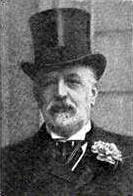
Nathan Rothschild, 1st Baron Rothschild

Nathan Rothschild, 1st Baron Rothschild, was a prominent British politician and financier, a key member of the Rothschild family. Born on November 8, 1840, and died on March 31, 1915, he held several significant political positions and had a profound impact on British economics and finance. more

You May Also Like

“The median family of four ... paid $4,722 in federal taxes last year. That's enough to pay for a new curtain for the secretary of commerce's office, to bribe a farmer not to plant 38 acres with corn ... seven weeks of salary for a Customs man assigned to save us from the terror of high-quality, low priced foreign TV sets, or the subsidy on 6,000 bushels of wheat to prop up the Soviet regime. Surely civilization would collapse without such essential services.”

“One of the most insidious consequences of the present burden of personal income tax is that it strips many middle class families of financial reserves & seems to lend support to campaigns for socialized medicine, socialized housing, socialized food, socialized every thing. The personal income tax has made the individual vastly more dependent on the State & more avid for state hand-outs. It has shifted the balance in America from an individual-centered to a State-centered economic & social system.”

“Whereas Absurdism in Europe seemed a logical, almost inevitable response to the irrationality of war, the analogous elements that surfaced in American drama seemed more a response to a materialist society run amok. The American-style Absurdism seemed to spring full-blown out of television advertisements and situation comedies, which had become new myth-making machines.”

“If modern design moved the stage picture away from the specific, tangible, illusionistic world of Romanticism and Realism into a generalized, theatrical, and poetic realm in which the pictorial image functioned as an extension of the playwright's themes and structures (a metanarrative), then postmodern design is a dissonant reminder that no single point of view can predominate, even within a single image.”