Quotessence
Home / Quotes / Quote by Adolf Hitler

Quote by Adolf Hitler

“Was there any form of filth or crime without at least one Jew involved in it? If you cut into such a sore, you find, like a maggot in a rotting body, often dazzled by the sudden light, a Jew.”

Quote by Adolf Hitler

Author
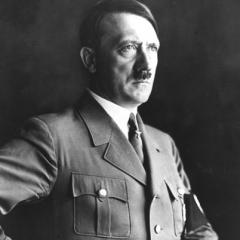
Adolf Hitler
Adolf Hitler

Adolf Hitler, born on April 20, 1889, and died on April 30, 1945, was a significant political figure in German history. He served as the Chancellor and Führer of Nazi Germany, playing a decisive role in the outbreak of World War II and having a profound impact on world history during his reign. more

You May Also Like

“The black-haired Jewish youth lies in wait for hours on end, satanically glaring at and spying on the unsuspicious girl whom he plans to seduce, adulterating her blood and removing her from the bosom of her own people. The Jew uses every possible means to undermine the racial foundations of a subjugated people.”

“Without chemical slaughterhouses, without a systematic mass murder, the tragedy of the Jews is just one out of the numerous tragedies that befell the nations of Europe during the Second World War. The Jewish people thus loses its martyr status, and the State of Israel, whose establishing was approved by the world under the impression of an alleged 'unparalleled genocide,' would lose its legitimacy.”

“Visiting the Holocaust Memorial Museum in Washington, D.C., for example, I was struck by its marginalization of any other victims apart from the Jews, to the extent that it presented photographs of dead bodies in camps such as Buchenwald or Dauchau as dead Jewish bodies, when in fact relatively few Jewish prisoners were held there.”

“Let me say it openly: we are surrounded by an enterprise of degradation, cruelty, and killing which rivals anything the Third Reich was capable of, indeed dwarfs it, in that ours is an enterprise without end, self-regenerating, bringing rabbits, rats, poultry, livestock ceaselessly into the world for the purpose of killing them.”

“I went to work at seven in the morning. Around noon time we got the watery soup. And we worked until seven or eight or nine at night, sometimes later. And then I walked back home - there was no public transportation - into that shared room. And if there was food we would prepare an evening meal depending on what was available. And then probably go to bed because it was cold most the time. And then start the day all over again, six or seven days a week.”