Quotessence
Home / Quotes / Quote by Anna Kavan

Quote by Anna Kavan

“To wait - only to wait - without even the final merciful deprivation of hope.Sometimes I think that some secret court must have tried and condemned me, unheard, to this heavy sentence.”

Quote by Anna Kavan

Author
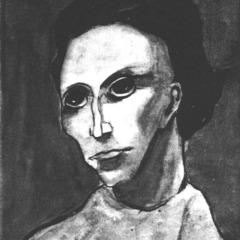
Anna Kavan
Anna Kavan

Anna Kavan was a British novelist born on April 10, 1901, and died on December 5, 1968. Known for her unique style and deep psychological insights, her works include 'Heaven's Last Summer' and 'The Song of Love'. Kavan's novels often delve into themes of death, loneliness, and surrealism. more

You May Also Like

“Father God, thank You for having no condemnation for those who are in Christ Jesus, because through Christ Jesus the law of the Spirit of life set me free from the law of sin and death. For what the law was powerless to do in that it was weakened by the sinful nature, You did by sending Your own Son in the likeness of sinful man to be a sin offering. (Rom. 8:1-3) Help me to understand that the loving chastisement that might come to me after I have rebelled against You is only in the purest Father's love and is never to be confused with condemnation. (Heb. 12:6)”

“Mind, I am not preaching anything contrary to accepted morality. I am not advocating free love in this or any other case. Society must go on, I suppose, and society can only exist if the normal, if the virtuous, and the slightly deceitful flourish, and if the passionate, the headstrong, and the too-truthful are condemned to suicide and madness.”

“The mysteries of a universe made of drops of fire and clods of mud do not concern us in the least. The fate of humanity condemned ultimately to perish from cold is not worth troubling about. If you take it to heart it becomes an unendurable tragedy. If you believe in improvement you must weep, for the attained perfection must end in cold, darkness and silence. In a dispassionate view the ardour for reform, improvement for virtue, and knowledge, and even for beauty is only a vain sticking up for appearances as though one were anxious about the cut of one's clothes in a community of blind men.”

“Besides, we weren't made to battle villains, because there weren't any. No nation, creed, or race was any better or worse than another; all were flawed, all were equally doomed to suffering, mostly because they couldn't see that they were all alike. Mortals might have been contemptible, true, but not evil entirely. They did enjoy killing one another and frequently came up with ingenious excuses for doing so on a grand scale-religions, economic theories, ethnic pride-but we couldn't condemn them for it, as it was in their mortal natures and they were too stupid to know any better.”

“Auntie Phyl's last months in the care home were extra pieces. Age is unnecessary. Some of us, like my mother, are fortunate enough to die swiftly and suddenly, in full possession of our faculties and our fate, but more and more of us will be condemned to linger, at the mercy of anxious or indifferent relatives, careless strangers, unwanted medical interventions, increasing debility, incontinence, memory loss. We live too long, but, like the sibyl hanging in her basket in the cave at Cumae, we find it hard to die.”