Quotessence
Home / Quotes / Quote by Kage Baker

Quote by Kage Baker

“Besides, we weren't made to battle villains, because there weren't any. No nation, creed, or race was any better or worse than another; all were flawed, all were equally doomed to suffering, mostly because they couldn't see that they were all alike. Mortals might have been contemptible, true, but not evil entirely. They did enjoy killing one another and frequently came up with ingenious excuses for doing so on a grand scale-religions, economic theories, ethnic pride-but we couldn't condemn them for it, as it was in their mortal natures and they were too stupid to know any better.”

Quote by Kage Baker

Work

In the Garden of Iden

In this science fiction novel, the reader is transported to a distant future where technology and society have evolved in profound ways. The story delves into complex questions of identity, memory, and the nature of humanity. Set in a world where genetic engineering and advanced technology are commonplace, the narrative follows characters who grapple with their own identities and the implications of their actions in a rapidly changing world. more

Author
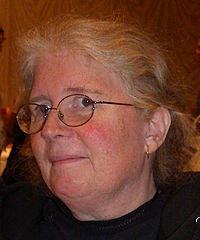
Kage Baker
Kage Baker

Kage Baker was an American writer known for her science fiction and fantasy novels. Her works are typically set against the backdrop of history and mythology, blending rich imagination with profound philosophical insights. Baker's writing style is unique, often described as both classical and modern. more

You May Also Like

“Auntie Phyl's last months in the care home were extra pieces. Age is unnecessary. Some of us, like my mother, are fortunate enough to die swiftly and suddenly, in full possession of our faculties and our fate, but more and more of us will be condemned to linger, at the mercy of anxious or indifferent relatives, careless strangers, unwanted medical interventions, increasing debility, incontinence, memory loss. We live too long, but, like the sibyl hanging in her basket in the cave at Cumae, we find it hard to die.”

“When I was a fairly precocious young man I became thoroughly impressed with the futility of the hopes and strivings that chase most men restlessly through life. Moreover, I soon discovered the cruelty of that chase, which in those years was much more carefully covered up by hypocrisy and glittering words than is the case today. By the mere existence of his stomach everyone was condemned to participate in that chase. The stomach might well be satisfied by such participation, but not man insofar as he is a thinking and feeling being.”

“Why had we let it go? Why had we both been condemned...to an exile among dreary strangers who had made us give up all desire for rest, for friendship, for the sound of human voices? Could I now reclaim a single hour spent talking to my brother, Philip, and give it to Ken Daggart? Who made it our duty to accept, as the only reward for our work, the gray torture of pretending love for those who roused nothing but contempt?”

“The judge who sits over the murderer and looks into his face, and at one moment recognizes all the emotions and potentialities and possibilities of the murderer in his own soul and hears the murderer's voice as his own, is at the next moment one and indivisible as the judge, and scuttles back into the shell of his cultivated self and does his duty and condemns the murderer to death.”

“We live, understandably enough, with the sense of urgency; our clock, like Baudelaire's, has had the hands removed and bears the legend, "It is later than you think." But with us it is always a little too late for mind, yet never too late for honest stupidity; always a little too late for understanding, never too late for righteous, bewildered wrath; always too late for thought, never too late for naïve moralizing. We seem to like to condemn our finest but not our worst qualities by pitting them against the exigency of time.”