“Nausea after too much psychology. If someone has good legs and is admitted to psychology, he can, in a short time and in any zigzag he likes, cover distances such as he cannot cover in any field. One's eyes overbrim at the sight.”
Quote by Franz Kafka
Work
The Blue Octavo Notebooks
This book is a fictional narrative that delves into the life of a 19th-century mathematician, whose notebooks contain cryptic and enigmatic equations. The story intertwines historical events with the mathematician's personal journey, creating a rich tapestry of historical fiction and mathematical intrigue. more
Author
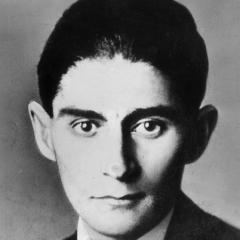
Franz Kafka
Franz Kafka (July 3, 1883 - June 3, 1924) was an important German-language novelist of the 20th century, known for his unique literary style and profound philosophical thoughts. His works, often themed around loneliness, alienation, and existentialism, have had a profound impact on literature and philosophy. more
You May Also Like
Source: The Evidence of Things Not Seen: Reflections on Faith, Science, and Economics
“Unhappiness plus shame is unbearable. Unhappiness plus blame is galvanizing”
Source: Kill Show
Source: Writing in Restaurants : Essays and Prose
“Stress, anxiety, and depression are caused when we are living to please others.”
Source: Poor Charlie's Almanack: The Wit and Wisdom of Charles T. Munger
Source: The Twelfth Preamble: To all the authors to be!
Source: Making Sense of Psychiatric Diagnosis: Understanding the DSM-5
Source: Unapologetically You: Reflections on Life and the Human Experience
Source: Man and His Symbols