“I think we have put a lot of emphasis on, of course, material wellbeing. By human economic betterment we mean material betterment. That’s economic enterprise, and that’s what Adam Smith worked out in his second book. But the first book had to do with human social betterment—all the things we do to make our lives better because we grow up in a social world. We learn in growing up that some actions are hurtful to others and they resent it, and some actions are beneficial to others, and they feel good about that and they tend to reward the beneficial actions. Those two sources account for a lot of the norms that we live by. Also, Adam Smith understood that—and I think this is remarkable—he understood that the downside was potentially far greater than the upside. So there is a fundamental asymmetry between gain and loss. And he didn’t just postulate that; he derived it from the idea there is an asymmetry between our joy and our sorrow. He got it from more fundamental considerations. Psychologists did not discover that until some 150 to 200 years later.”
Quote by Vernon L. Smith
Work
The Evidence of Things Not Seen: Reflections on Faith, Science, and Economics
Browse quotes and source details for this work. more
Author
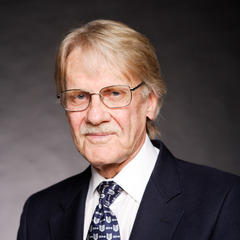
Vernon L. Smith
Vernon L. Smith is an esteemed economist renowned for his pioneering work in experimental economics. Born on January 1, 1927, he has received numerous honors throughout his career, including the Nobel Prize in Economics in 1991. more
You May Also Like
“Unhappiness plus shame is unbearable. Unhappiness plus blame is galvanizing”
Source: Kill Show
Source: Writing in Restaurants : Essays and Prose
“Stress, anxiety, and depression are caused when we are living to please others.”
Source: Poor Charlie's Almanack: The Wit and Wisdom of Charles T. Munger
Source: The Twelfth Preamble: To all the authors to be!
Source: Making Sense of Psychiatric Diagnosis: Understanding the DSM-5
Source: Unapologetically You: Reflections on Life and the Human Experience
Source: Man and His Symbols
Source: The Shadow Work Workbook: Self-Care Exercises for Healing Your Trauma and Exploring Your Hidden Self