Quotessence
Home / Quotes / Quote by Joshua Lederberg

Quote by Joshua Lederberg

“The central moral issue of science is that we do not have a science of peace and hardly know where to begin in building one.”

Quote by Joshua Lederberg

Author
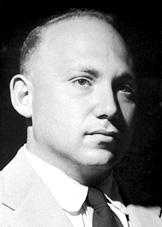
Joshua Lederberg
Joshua Lederberg

Joshua Lederberg was a renowned molecular biologist who made significant contributions to the fields of genetics, molecular biology, and genetic engineering. His research involved bacterial genetics, gene recombination, and gene regulation, which had a profound impact on the development of modern biosciences. more

You May Also Like

“With reason, then, the common opinion of mankind, little affected by the few dissentients who have contended for the opposite view, has found in the careful study of nature, and in the laws of nature, the foundations of the division of property, and the practice of all ages has consecrated the principle of private ownership, as being pre-eminently in conformity with human nature, and as conducing in the most unmistakable manner to the peace and tranquility of human existence.”

“It is clear that the main tenet of socialism, community of goods, must be utterly rejected, since it only injures those whom it would seem meant to benefit, is directly contrary to the natural rights of mankind, and would introduce confusion and disorder into the commonweal. The first and most fundamental principle, therefore, if one would undertake to alleviate the condition of the masses, must be the inviolability of private property.”

“We have seen that this great labor question cannot be solved save by assuming as a principle that private ownership must be held sacred and inviolable. The law, therefore, should favor ownership, and its policy should be to induce as many as possible of the people to become owners.”

“For when men know they are working on what belongs to them, they work with far greater eagerness and diligence. Nay, in a word, they learn to love the land cultivated by their own hands, whence they look not only for food but for some measure of abundance for themselves and their dependents. All can see how much this willing eagerness contributes to an abundance of produce and the wealth of a nation.”

“Therefore those governing the State ought primarily to devote themselves to the service of individual groups and of the whole commonwealth, and through the entire scheme of laws and institutions to cause both public and individual well-being to develop spontaneously out of the very structure and administration of the state.”

“Whoso turns his attention to the bitter strifes of these days and seeks a reason for the troubles that vex public and private life must come to the conclusion that a fruitful cause of the evils which now afflict, as well as of those which threaten us, lies in this: that false conclusions concerning divine and human things, which originated in the schools of philosophy, have crept into all the orders of the state, and have been accepted by the common consent of the masses.”

“It has been the fashion to speak of the conflict between human rights and property rights, and from this it has come to be widely believed that the use of private property is tainted with evil and should not be espoused by rational and civilized men... the only dependable foundation of personal liberty is the personal economic security of private property. The Good Society.”

“There are but three political-economic roads from which we can choose... We could take the first course and further exacerbate the already concentrated ownership of productive capital in the American economy. Or we could join the rest of the world by taking the second path, that of nationalization. Or we can take the third road, establishing policies to diffuse capital ownership broadly, so that many individuals, particularly workers, can participate as owners of industrial capital. The choice is ours.”