Quotessence
Home / Quotes / Quote by Joseph Addison

Quote by Joseph Addison

“It is easier for an artful Man, who is not in Love, to persuade his Mistress he has a Passion for her, and to succeed in his Pursuits, than for one who loves with the greatest Violence. True Love hath ten thousand Griefs, Impatiencies and Resentments, that render a Man unamiable in the Eyes of the Person whose Affection he sollicits.”

Quote by Joseph Addison

Work

The spectator

The Spectator is a renowned publication known for its insightful essays and social commentary. It was established in the 18th century and has since become a significant part of English literature, offering readers a glimpse into the cultural and intellectual climate of its time. more

Author

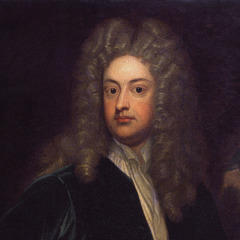
Joseph Addison
Joseph Addison

Joseph Addison, born on May 1, 1672, and died on June 17, 1719, was an influential English essayist, dramatist, and poet. He is known for his elegant prose style and his co-authorship of the magazine 'The Spectator' with Richard Steele. more

You May Also Like

“The only way therefore to try a Piece of Wit, is to translate it into a different Language: If it bears the Test you may pronounceit true; but if it vanishes in the Experiment you may conclude it to have been a Punn.”

“One would wonder to hear skeptical men disputing for the reason of animals, and telling us it is only our pride and prejudices that will not allow them the use of that faculty. Reason shows itself in all occurrences of life; whereas the brute makes no discovery of such a talent, but in what immediately regards his own preservation, or the continuance of his species. Animals in their generation are wiser than the sons of men; but their wisdom is confined to a few particulars, and lies in a very narrow compass. Take a brute out of his instinct, and you find him wholly deprived of understanding.”

“I always rejoice when I see a tribunal filled with a man of an upright and inflexible temper, who in the execution of his country's laws can overcome all private fear, resentment, solicitation, and even pity it self. Whatever passion enters into a sentence or decision, so far will there be in it a tincture of injustice. In short, justice discards party, friendship, kindred, and is therefore always represented as blind, that we may suppose her thoughts are wholly intent on the equity of a cause, without being diverted or prejudiced by objects foreign to it.”