Quotessence
Home / Quotes / Quote by Mark Twain

Quote by Mark Twain

Work

Mark Twain at Your Fingertips: A Book of Quotations

This book presents a curated selection of Mark Twain's most memorable and insightful quotes, showcasing his sharp wit and profound observations on various aspects of life and society. more

Author
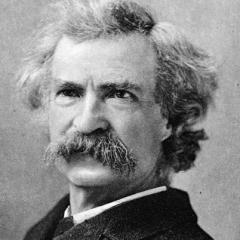
Mark Twain
Mark Twain

Mark Twain, born Samuel Langhorne Clemens, was a renowned American author and humorist in the 19th century. His works are characterized by humor, satire, and profound social insight, with notable novels such as 'The Adventures of Tom Sawyer' and 'The Adventures of Huckleberry Finn'. more

You May Also Like

“All things are made of atoms - little particles that move around in perpetual motion, attracting each other when they are a little distance apart, but repelling upon being squeezed into one another. In that one sentence, you will see, there is an enormous amount of information about the world, if just a little imagination and thinking are applied.”

“Any one who has studied the history of science knows that almost every great step therein has been made by the "anticipation of Nature," that is, by the invention of hypotheses, which, though verifiable, often had very little foundation to start with; and, not unfrequently, in spite of a long career of usefulness, turned out to be wholly erroneous in the long run.”

“At first he who invented any art that went beyond the common perceptions of man was naturally admired by men, not only because there was something useful in the inventions, but because he was thought wise and superior to the rest. But as more arts were invented, and some were directed to the necessities of life, others to its recreation, the inventors of the latter were always regarded as wiser than the inventors of the former, because their branches of knowledge did not aim at utility.”

“But science is the great instrument of social change, all the greater because its object is not change but knowledge, and its silent appropriation of this dominant function, amid the din of political and religious strife, is the most vital of all the revolutions which have marked the development of modern civilisation.”

“But the greatest error of all the rest is the mistaking or misplacing of the last or farthest end of knowledge: for men have entered into a desire of learning and knowledge, sometimes upon a natural curiosity and inquisitive appetite; sometimes to entertain their minds with variety and delight; sometimes for ornament and reputation; and sometimes to enable them to victory of wit and contradiction; and most times for lucre and profession; and seldom sincerely to give a true account of their gift of reason, to the benefit and use of men.”