Quotessence
Home / Quotes / Quote by Christoffer Boe

Quote by Christoffer Boe

“A debut movie is something that you envision for many, many years. If you really want to make a movie, you constantly think about this first movie, so when you make it, you want to have everything in it.”

Quote by Christoffer Boe

Author
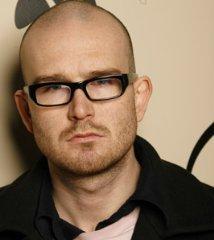
Christoffer Boe
Christoffer Boe

Christoffer Boe, born on May 7, 1974, is a renowned Danish film director. His works are known for their unique perspective and profound themes, which have won him the admiration of audiences worldwide. more

You May Also Like

“We're in this strange age where we can't say 'I love you,' at least not sincerely. It's something where, if you simplify it, the whole point of trying to capture it would sort of make it dead. The fragmented thing can create a situation where the holes between the pieces of the puzzle can be filled with meaning, and thereby you get a greater sense of complexity or feeling.”

“Dostoevsky believed that the gods of rationalism and materialist utilitarianism had joined in conspiracy against all other ethical systems. ... The accumulation of capital, or the acquisition of money, are endeavors par excellence which establish a quantifiable goal: hence they are directly amenable to maximization formulae.”

“Modern anthropology ... opposes the utilitarian assumption that the primitive chants as he sows seed because he believes that otherwise it will not grow, the assumption that his economic goal is primary, and his other activities are instrumental to it. The planting and the cultivating are no less important than the finished product. Life is not conceived as a linear progression directed to, and justified by, the achievement of a series of goals; it is a cycle in which ends cannot be isolated, one which cannot be dissected into a series of ends and means.”

“Unlike Hegel's progress model of history, which moves by stages, each containing its own logic of growth and decline, the economic model develops as the simple function of one money-variable over time, with a long-term trend which increases monotonically.”

“Stirner and Nietzsche [adopt] a mode of thinking which is personal, introspective, and which while often operating on alternative systems of belief and action does so only as a means of better grasping one dominant goal the patterns of individual redemption. Stirner and Nietzsche are not primarily interested in critique as such. ... Their work is too egoistically compelled for them ever to employ the external world as more than the repository for a series of projections of their own.”

“What stands most explicitly as critique in Nietzsche's late work in not a development from earlier interests but a return to two problems of enduring personal involvement for him, those of Wagner and of Christianity. Der Antichrist , to take one case, is not a response to a resuscitating public interest in Christian religion; it is primarily a renewed attempt to resolve for himself the question of piety.”