“Every one of us knows how painful it is to be called by malicious names, to have his character undermined by false insinuations, to be overreached in a bargain, to be neglected by those who rise in life, to be thrust on one side by those who have stronger wills and stouter hearts. Every one knows, also, the pleasure of receiving a kind look, a warm greeting, a hand held out to help in distress, a difficulty solved, a higher hope revealed for this world or the next. By that pain and by that pleasure let us judge what we should do to others.”
Quote by Arthur Penrhyn Stanley
Author
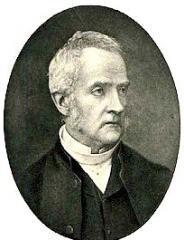
Arthur Penrhyn Stanley
Arthur Penrhyn Stanley was an English author born on December 13, 1815, and died on July 18, 1881. His works covered a range of subjects including history, religion, and literature. more
You May Also Like
Source: Unity of Evangelical and Apostolical Teaching: Sermons Preached Mostly in Canterbury Cathedral
“I doubt if hard work, steadily and regularly carried on, ever yet hurt anybody.”
Source: Danger in the Comfort Zone: From Boardroom to Mailroom--how to Break the Entitlement Habit That's Killing American Business
“With air travel there is no distance, there is only time.”
Source: Danger in the Comfort Zone: From Boardroom to Mailroom--how to Break the Entitlement Habit That's Killing American Business
Source: Danger in the Comfort Zone: From Boardroom to Mailroom--how to Break the Entitlement Habit That's Killing American Business