Quotessence
Home / Quotes / Quote by Albert Schweitzer

Quote by Albert Schweitzer

“There slowly grew up in me an unshakable conviction that we have no right to inflict suffering and death on another living creature, unless there is some unavoidable necessity for it.”

Quote by Albert Schweitzer

Work

The African Sermons

This book compiles a selection of religious sermons that have been delivered across various African communities, showcasing the diverse spiritual and cultural perspectives prevalent in the region. more
Author

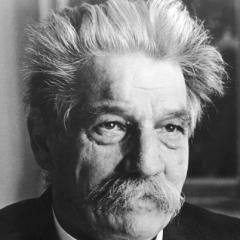
Albert Schweitzer
Albert Schweitzer

Albert Schweitzer, born on January 14, 1875, and died on September 4, 1965, was a German theologian, musician, philosopher, and physician. He is renowned for his missionary work in Africa. more

You May Also Like

“When I was 88 years old, I gave up meat entirely and switched to a plant foods diet following a slight stroke. During the following months, I not only lost 50 pounds, but gained strength in my legs and picked up stamina. Now, at age 93, I'm on the same plant-based diet, and I still don't eat any meat or dairy products. I either swim, walk, or paddle a canoe daily and I feel the best I've felt since my heart problems began.”

“It is increasingly obvious that environmentally sustainable solutions to world hunger can only emerge as people eat more plant foods and fewer animal products. To me it is deeply moving that the same food choices that give us the best chance to eliminate world hunger are also those that take the least toll on the environment, contribute the most to our long-term health, are the safest, and are also, far and away, the most compassionate towards our fellow creatures.”

“A human body in no way resembles those that were born for ravenousness; it hath no hawk's bill, no sharp talon, no roughness of teeth, no such strength of stomach or heat of digestion, as can be sufficient to convert or alter such heavy and fleshy fare . . . There is nobody that is willing to eat even a lifeless and a dead thing even as it is; so they boil it, and roast it, and alter it by fire and medicines, as it were, changing and quenching the slaughtered gore with thousands of sweet sauces, that the palate being thereby deceived may admit of such uncouth fare.”

“In all the round world of Utopia there is no meat. There used to be, but now we cannot stand the thought of slaughterhouses. And it is impossible to find anyone who will hew a dead ox or pig. I can still remember as a boy the rejoicings over the closing of the last slaughterhouse.”

“I do not see any reason why animals should be slaughtered to serve as human diet when there are so many substitutes. After all, man can live without meat. It is only some carnivorous animals that have to subsist on flesh. Killing animals for sport, for pleasure, for adventures, and for hides and furs is a phenomenon which is at once disgusting and distressing. There is no justification in indulging in such acts of brutality . . . Life is as dear to a mute creature as it is to a man. Just as one wants happiness and fears pain, just as one wants to live and not to die, so do other creatures.”