Quotessence
Home / Quotes / Quote by Ayn Rand

Quote by Ayn Rand

“And questions give us no rest. We know not why our curse makes us seek we know not what, ever and ever. But we cannot resist it. It whispers to us that there are great things on this earth of ours, and that we can know them if we try, and that we must know them. We ask, why must we know, but it has no answer to give us. We must know that we may know.”

Quote by Ayn Rand

Work

Ayn Rand Reader

This book compiles a selection of Ayn Rand's writings, including philosophical essays, lectures, and speeches, showcasing her ideas on Objectivism, individualism, and capitalism. more

Author

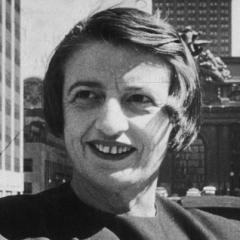
Ayn Rand
Ayn Rand

American novelist and philosopher, known for her novels and philosophical ideas. Her works emphasize individualism, free markets, and rationalism, and have had a profound impact on politics and philosophy in the late 20th century. more

You May Also Like

“I know not if this earth on which I stand is the core of the universe or if it is but a speck of dust lost in eternity. I know not and I care not. For I know what happiness is possible to me on earth. And my happiness needs no higher aim to vindicate it. My happiness is not the means to any end. It is the end. It is its own goal. It is its own purpose.”

“I must hold in balance the sense of the futility of effort and the sense of the necessity to struggle; the conviction of the inevitability of failure and still the determination to 'succeed'-and, more than these, the contradiction between the dead hand of the past and the high intentions of the future. If I could do this through the common ills-domestic, professional and personal-then the ego would continue as an arrow shot from nothingness to nothingness with such force that only gravity would bring it to earth at last.”

“That’s the thing with the young these days, isn’t it? They watch too many happy endings. Everything has to be wrapped up, with a smile and a tear and a wave. Everyone has learned, found love, seen the error of their ways, discovered the joys of monogamy, or fatherhood, or filial duty, or life itself. In my day, people got shot at the end of films, after learning only that life is hollow, dismal, brutish, and short.”

“It was autumn, the springtime of death. Rain spattered the rotting leaves, and a wild wind wailed. Death was singing in the shower. Death was happy to be alive. The fetus bailed out without a parachute. It landed in the sideline Astroturf, so upsetting the cheerleaders that for the remained of the afternoon their rahs were more like squeaks.”

“We had been everywhere. We had really seen nothing. And I catch myself thinking today that our long journey had only defiled with a sinuous trail of slime the lovely, trustful, dreamy, enormous country that by then, in retrospect, was no more to us than a collection of dog-eared maps, ruined tour books, old tires, and her sobs in the night — every night, every night — the moment I feigned sleep.”

“So he was deserted. The whole world was clamouring: Kill yourself, kill yourself, for our sakes. But why should he kill himself for their sakes? Food was pleasant; the sun hot; and this killing oneself, how does one set about it, with a table knife, uglily, with floods of blood, - by sucking a gaspipe? He was too weak; he could scarcely raise his hand. Besides, now that he was quite alone, condemned, deserted, as those who are about to die are alone, there was a luxury in it, an isolation full of sublimity; a freedom which the attached can never know.”