Quotessence
Home / Quotes / Quote by Paul Ehrenfest

Quote by Paul Ehrenfest

“Einstein, my upset stomach hates your theory [of General Relativity]—it almost hates you yourself! How am I to' provide for my students? What am I to answer to the philosophers?!!”

Quote by Paul Ehrenfest

Author
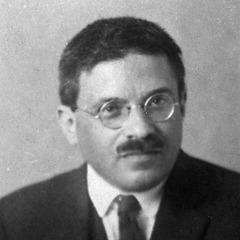
Paul Ehrenfest
Paul Ehrenfest

Paul Ehrenfest was a prominent physicist born on January 18, 1880, and died on September 25, 1933. He played a significant role in the development of quantum mechanics, particularly in statistical mechanics and quantum field theory. more

You May Also Like

“The value of money has been settled by general consent to express our wants and our property, as letters were invented to express our ideas; and both these institutions, by giving a more active energy to the powers and passions of human nature, have contributed to multiply the objects they were designed to represent.”

“It is scarcely possible that the eyes of contemporaries should discover in the public felicity the latent causes of decay and corruption. This long peace, and the uniform government of the Romans, introduced a slow and secret poison into the vitals of the empire. The minds of men were gradually reduced to the same level, the fire of genius was extinguished, and even the military spirit evaporated.”

“Hope, the best comfort of our imperfect condition, was not denied to the Roman slave; and if he had any opportunity of rendering himself either useful or agreeable, he might very naturally expect that the diligence and fidelity of a few years would be rewarded with the inestimable gift of freedom.”

“A warlike nation like the Germans, without either cities, letters, arts, or money, found some compensation for this savage state in the enjoyment of liberty. Their poverty secured their freedom, since our desires and our possessions are the strongest fetters of despotism.”

“The urgent consideration of the public safety may undoubtedly authorize the violation of every positive law. How far that or any other consideration may operate to dissolve the natural obligations of humanity and justice, is a doctrine of which I still desire to remain ignorant.”

“The decline of Rome was the natural and inevitable effect of immoderate greatness. Prosperity ripened the principle of decay; the cause of the destruction multiplied with the extent of conquest; and, as soon as time or accident and removed the artificial supports, the stupendous fabric yielded to the pressure of its own weight. The story of the ruin is simple and obvious: and instead of inquiring why the Roman Empire was destroyed we should rather be surprised that it has subsisted for so long.”