Quotessence
Home / Quotes / Quote by James E. Faust

Quote by James E. Faust

“Satan had two conditions [to his plan]: the first was the denial of agency, and the second, that he would have the honor. In other words, something had to be in it for him. And thus he became the father of lies and selfishness. Taking up one's cross and following the Savior means overcoming selfishness; it is a commitment to serve others. Selfishness is one of the baser human traits, which must be subdued and overcome. We torture our souls when we focus on getting rather than giving.”

Quote by James E. Faust

Author
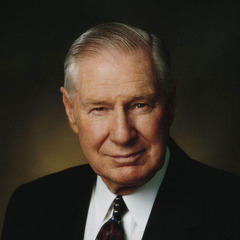
James E. Faust
James E. Faust

James E. Faust was a distinguished lawyer known for his remarkable contributions to the legal field. Born on July 31, 1920, and passing away on August 10, 2007, Faust made a significant impact through his profound legal knowledge and extensive practical experience, setting an example for the legal community. more

You May Also Like

“Let it never be said by future generations that indifference, cynicism or selfishness made us fail to live up to the ideals of humanism which the Nobel Peace Prize encapsulates. Let the strivings of us all, prove Martin Luther King Jr. to have been correct, when he said that humanity can no longer be tragically bound to the starless midnight of racism and war.”

“Under private property, each tries to establish over the other an alien power, so as thereby to find satisfaction of his own selfish need. The increase in the quantity of objects is therefore accompanied by an extension of the realm of the alien powers to which man is subjected, and every new product represents a new potentiality of mutual swindling and mutual plundering.”

“Being myself animated by feelings of affection toward my fellowmen, I am saddened by the modern system of advertising. Whatever evidence it offers of enterprise, ingenuity, impudence, and resource in certain individuals, it proves to my mind the wide prevalence of that form of mental degradation which is called gullibility.”

“EARTH DAY uses one of humanity's great discoveries, the discovery of anniversaries by which, throughout time, human beings have kept their sorrows and their joys, their victories, their revelations and their obligations alive, for re-celebration and re-dedication another year, another decade, another century, another eon.”