Quotessence
Home / Quotes / Quote by Thomas Carlyle

Quote by Thomas Carlyle

Work

Critical and Miscellaneous Essays

This book is a compilation of essays that delve into a wide range of subjects, employing critical thinking and analysis. The essays cover a broad spectrum of themes, offering readers insights into different perspectives and ideas. more

Author
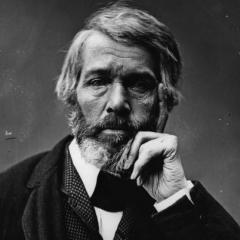
Thomas Carlyle
Thomas Carlyle

Thomas Carlyle, born on December 4, 1795, and died on February 5, 1881, was a prominent Scottish philosopher, historian, and writer. His works are known for their profound social criticism and unique literary style, which had a significant impact on 19th-century British literature and thought. more

You May Also Like

“If hemp could supply the energy needs of the United States, its value would be inestimable. Now that the drug czar is in final retreat, America has an opportunity to, once and for all, say farewell to the Exxon Valdez, Saddam Hussein and a prohibitively expensive brinkmanship in the desert sands of Saudi Arabia.”

“In a large congregation, while there is a wide diversification of interest, it is also true that there are only a few basic human problems. It must also be taken into consideration that people are people regardless of who they are or what their backgrounds may be. There are certain deep universal appeals to human interest and to these human nature always responds.”

“Zen is to religion what a Japanese "rock garden" is to a garden. Zen knows no god, no afterlife, no good and no evil, as the rock-garden knows no flowers, herbs or shrubs. It has no doctrine or holy writ: its teaching is transmitted mainly in the form of parables as ambiguous as the pebbles in the rock-garden which symbolise now a mountain, now a fleeting tiger. When a disciple asks "What is Zen?", the master's traditional answer is "Three pounds of flax" or "A decaying noodle" or "A toilet stick" or a whack on the pupil's head.”

“Einstein's space is no closer to reality than Van Gogh's sky . The glory of science is not in a truth more absolute than the truth of Bach or Tolstoy, but in the act of creation itself. The scientist's discoveries impose his own order on chaos, as the composer or painter imposes his; an order that always refers to limited aspects of reality, and is based on the observer's frame of reference, which differs from period to period as a Rembrant nude differs from a nude by Manet.”