“The impulse to perfection cannot exist where the definition of perfection is the arbitrary decision of authority. That which is born in loneliness and from the heart cannot be defended against the judgment of a committee of sycophants. The volatile essences which make literature cannot survive the clichés of a long series of story conferences.”
Quote by Raymond Chandler
Work
Raymond Chandler Speaking
This book presents a selection of speeches and interviews by Raymond Chandler, an influential figure in the genre of detective fiction. It offers insights into Chandler's approach to writing, his thoughts on the evolution of the detective novel, and his personal experiences within the literary world. The content is drawn from various sources, providing a comprehensive view of Chandler's perspectives on his work and the field of detective fiction. more
Author
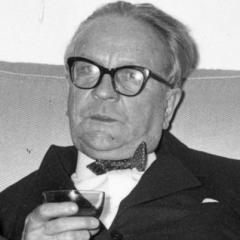
Raymond Chandler
Raymond Chandler was an American novelist renowned for his hard-boiled detective novels. His works are celebrated for their unique narrative style and profound insights into the criminal world. Chandler's most famous works include 'The Big Sleep' and 'Farewell, My Lovely'. more
You May Also Like
Source: The World of Raymond Chandler: In His Own Words
“In time of prosperity friends will be plenty; In time of adversity not one in twenty.”
“He that hath money in his purse cannot want a head for his shoulders.”
Source: Lexicon Tetraglotton, an English-French-Italian-Spanish Dictionary: Whereunto is Adjoined a Large Nomenclature of the Proper Terms (in All the Four) Belonging to Several Arts and Sciences, to Recreations, to Professions Both Liberal and Mechanick, &c. Divided Into Fiftie Two Sections; with Another Volume of the Choicest Proverbs in All the Said Toungs, (consisting of Divers Compleat Tomes)
Source: The migration of ideas: three lectures delivered on the North Foundation at Franklin and Marshall College on 18 and 19 March 1954
“How come nobody wants to argue with me? Is it because I'm always so right?”
Source: The Culture We Deserve