“It is no wonder if, under the pressure of these possibilities of suffering, men are accustomed to moderate their claims to happiness - just as the pleasure principle itself, indeed, under the influence of the external world, changed into the more modest reality principle -, if a man thinks himself happy merely to have escaped unhappiness or to have survived his suffering, and if in general the task of avoiding suffering pushes that of obtaining pleasure into the background.”
Quote by Sigmund Freud
Author
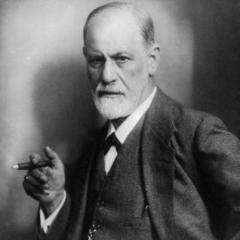
Sigmund Freud
Sigmund Freud, born on May 6, 1856, in Moravia, and died on September 23, 1939, in London, was an Austrian neurologist and the founder of psychoanalysis. Known as the father of modern psychology, Freud made significant contributions to the understanding of human psychology, introducing concepts such as the unconscious mind, dream analysis, and sexual theory. more
You May Also Like
Source: Civilization and Its Discontents
Source: The standard edition of the complete psychological works of Sigmund Freud
Source: The standard edition of the complete psychological works of Sigmund Freud
Source: The standard edition of the complete psychological works of Sigmund Freud
Source: Major Works
Source: The standard edition of the complete psychological works of Sigmund Freud
Source: The standard edition of the complete psychological works of Sigmund Freud
Source: The standard edition of the complete psychological works of Sigmund Freud
Source: The standard edition of the complete psychological works of Sigmund Freud
Source: The standard edition of the complete psychological works of Sigmund Freud