“BIRTH, n. The first and direst of all disasters. As to the nature of it there appears to be no uniformity. Castor and Pollux were born from the egg. Pallas came out of a skull. Galatea was once a block of stone. Peresilis, who wrote in the tenth century, avers that he grew up out of the ground where a priest had spilled holy water. It is known that Arimaxus was derived from a hole in the earth, made by a stroke of lightning. Leucomedon was the son of a cavern in Mount Etna, and I have myself seen a man come out of a wine cellar.”
Quote by Ambrose Bierce
Work
The Unabridged Devil's Dictionary
This book is a compilation of witty and often irreverent definitions, challenging conventional meanings and offering a critical commentary on society and human nature. It is a work of literary wit and social critique, celebrated for its clever wordplay and sharp observations. more
Author
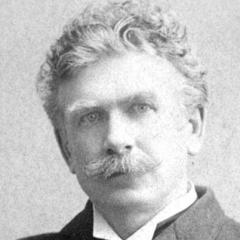
Ambrose Bierce
Ambrose Bierce was an American journalist, satirist, and editor, renowned for his sharp wit and dark humor. He is best known for his satirical novel 'The Devil's Dictionary' and his short stories. Bierce was born on June 24, 1842, and his exact date of death remains unknown, as he disappeared during the American Civil War. more
You May Also Like
“I am terribly proud of-I was born in Cambridge in 1952 and my initials are DNA!”
Source: The Salmon of Doubt: Hitchhiking the Galaxy One Last Time
Source: Pensées
Source: Science and the Modern World
Source: The Collected Works of C. G. Jung: Structure and dynamics of the psyche
“Having no unusual coincidence is far more unusual than any coincidence could possibly be.”
Source: The planet that wasn't